
In this guide
A side mirror damaged in a narrow passing space can involve more than a broken glass surface. The housing may be loose, the attachment to the door may be disturbed, or an electrical function may have stopped after the impact. CarTech Hub – Multi-Brand Car Workshop in Guwahati helps owners assess the repair scope and prepare an insurance enquiry. For a Kia Sonet, the fitted mirror equipment must be identified from the actual car. The model name alone cannot confirm whether a proposed unit has the correct connections, adjustment, folding function or other features.
Tell the workshop exactly what happened to the mirror
Describe which side was struck and whether the mirror was folded, extended or damaged during parking. Photograph the complete unit, the mounting base, nearby door marks and any loose cover or glass. Keep detached components available for the insurer's inspection. If an electrical function was already faulty, record that history separately; it should not be presented as a new accident effect.
A useful inspection checks whether the damage is isolated to the mirror or extends into the door attachment and wiring. Avoid repeatedly operating a damaged mechanism in an attempt to force it into position. Ask CarTech Hub how to arrange inspection if rearward visibility or a loose part makes travelling with the vehicle unsafe.
Separate glass, cover and full-assembly decisions
Some mirror components may be individually replaceable, while other damage requires a complete unit. The decision should depend on the observed damage, parts information and applicable repair procedure. Painting a broken housing does not restore its attachment, and a functioning adjustment motor does not prove that the complete mirror is undamaged.
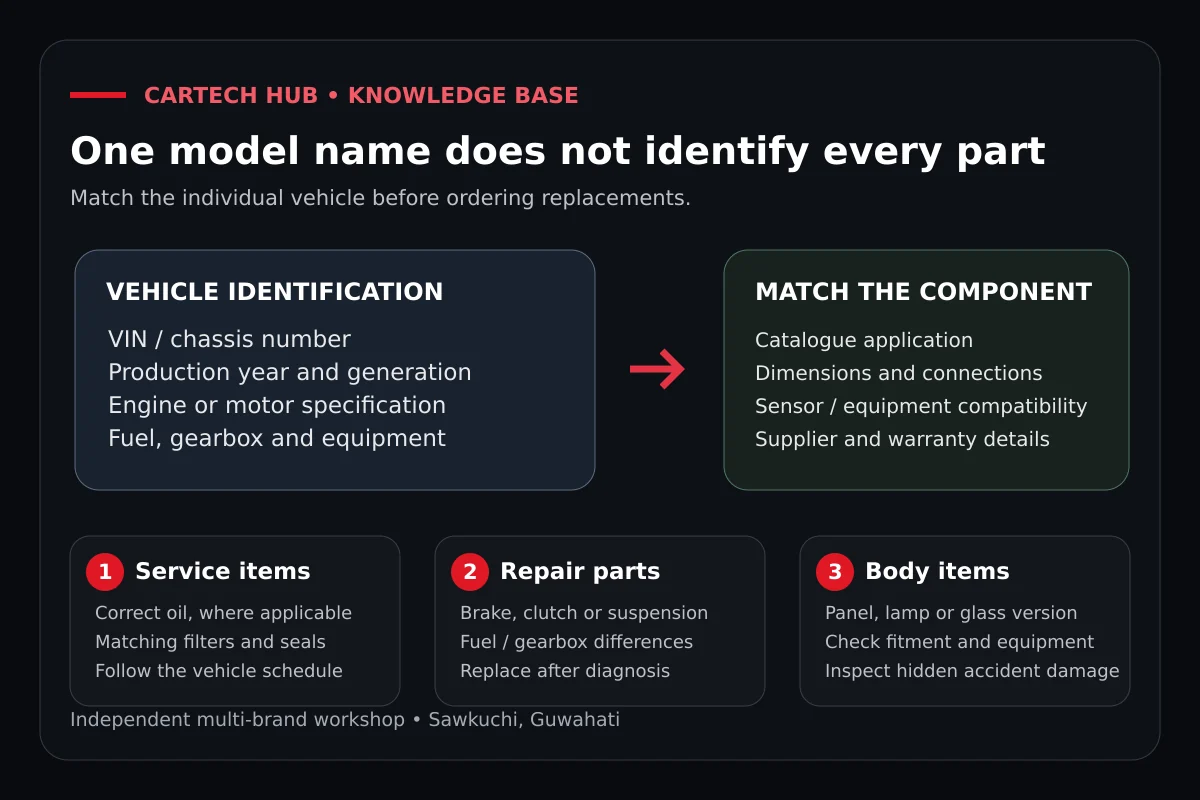
Confirm the vehicle year, variant, relevant identification and side before accepting a parts proposal. Where the car has a turn indicator, camera, sensor or another integrated feature, the estimate must address the equipment actually fitted. Special setting or calibration work is conditional on the vehicle and should be planned only with confirmed qualified capability. CarTech Hub should explain the proposed component source and fitment checks without claiming that all mirrors or variants share the same unit.
Create a clear incident and policy file
After contacting the workshop with the vehicle and insurance information, notify the insurer through its official claim reporting route. Save the claim reference and an accurate account of the incident. The document request commonly involves the policy, RC, relevant driving licence, photographs and claim form; police documentation or an FIR may be needed where applicable. Obtain the insurer's specific instructions before assuming that every claim uses identical paperwork.
The insurer can require a surveyor inspection or another assessment arrangement. Keep the broken mirror and visible damage accessible for that step. Dismantling or ordering a replacement before approval may complicate the record, so ask what is permitted. CarTech Hub can assist with documentation and estimation, while the insurer decides admissibility.
Explain the replacement and refinishing estimate
A mirror estimate should distinguish the necessary components, removal and installation, electrical checks and any paint required on the cover. Door damage needs separate evidence and estimation. If inspection reveals a damaged mounting base or concealed accident-related wiring, document it and request a supplementary approval before adding the work to the insured repair.
Insurer authorisation must be followed by the owner's consent to the repair and any privately funded portion. This is especially useful when a full assembly includes functions that the customer did not realise differed between variants. The final plan should restore the appropriate equipment, rather than quietly substitute a simpler mirror because it resembles the original externally.
Know when cashless settlement may apply
Insurance Claim Assistance Available – Cashless Eligibility to Be Confirmed. For an ORVM claim at CarTech Hub, policy terms, survey findings, insurer approval and workshop/network eligibility determine whether cashless repair is available. A small repair bill does not by itself make a claim cashless, and the workshop must confirm the arrangement for the insurer and policy involved.
A third-party-only policy does not pay for damage to the owner's mirror. Ordinary wear, a previous motor fault or earlier scratches are not automatically covered by a later incident. Deductibles, depreciation and non-payable charges may remain, including where a zero-depreciation add-on applies subject to its conditions. Ask for the likely contribution and any reimbursement requirements before deciding whether to proceed under insurance.
Verify usable rearward view at handover
Following approved work, review the mirror attachment, adjustment range and the electrical functions included in the job. Inspect the cover finish if painting was required. The mirror should be evaluated as part of the driver's usable view, not just as an attractive replacement housing. Any equipment-specific checks need to be completed by the appropriate personnel.
CarTech Hub should provide the repair invoice and complete the insurer's final document request. The customer settles deductibles, depreciation and other non-payable items before delivery. Inspection, approval and settlement processes can differ by policy and accident circumstances. Keep the records so that a later concern about operation can be described precisely instead of being confused with the original claim scope.
Enquire about a damaged side mirror
Choose an inspection appointment or send your policy and claim enquiry. Call CarTech Hub to discuss safe inspection arrangements, or WhatsApp photographs of the mirror and door. You may view the Google Reviews link when considering the Guwahati workshop.
Official insurer claim channels
Choose your insurer’s official claim-intimation link. Submit policy and identity information directly through the insurer’s approved channel. Its process and cashless authorization remain subject to your policy and the assessed claim.
Quick answers
Does damaged mirror glass always mean a complete ORVM is needed?
Not necessarily. The housing, mechanism, mounting and available service parts must be assessed before proposing a glass component or full assembly.
Why does the workshop ask about folding and other functions?
Equipment affects fitment and electrical compatibility. The replacement should match the functions actually fitted to the vehicle.
Can mirror damage and old door scratches be combined?
Describe each condition truthfully. The insurer assesses the damage attributable to the declared incident; older scratches are not automatically included.
Can a cashless mirror claim still involve customer payment?
Yes. Deductibles, depreciation and other excluded or non-payable amounts can remain even when the insurer authorises cashless settlement.