
In this guide
Start with the rear closure and lamp condition
A rear impact on a Hyundai Venue may leave a bumper dent and a tailgate that needs a harder push to close. Do not assume that the latch or luggage-floor area is undamaged because the car starts normally. Note broken lamp lenses, a displaced exhaust, loose trim and any change in tailgate operation. If the closure cannot be secured or damaged components make driving unsafe, organise suitable recovery.
At CarTech Hub, the first step is a damage-inspection booking with your Venue's year and the impact description. CarTech Hub is an independent multibrand workshop in Guwahati, not an authorised Hyundai service centre. Assessment and claim assistance are separate from SBI General's decision to accept or pay a claim.
Review the SBI General cover and settlement route
SBI General Insurance Company Limited currently lists private-car insurance products. Check the active own-damage period and the policy's vehicle information, deductible and purchased add-ons. Third-party-only insurance does not pay for your own Venue's accident repair. Faded paint, worn seals and other routine maintenance are usually outside an accident claim, even when identified during intake.
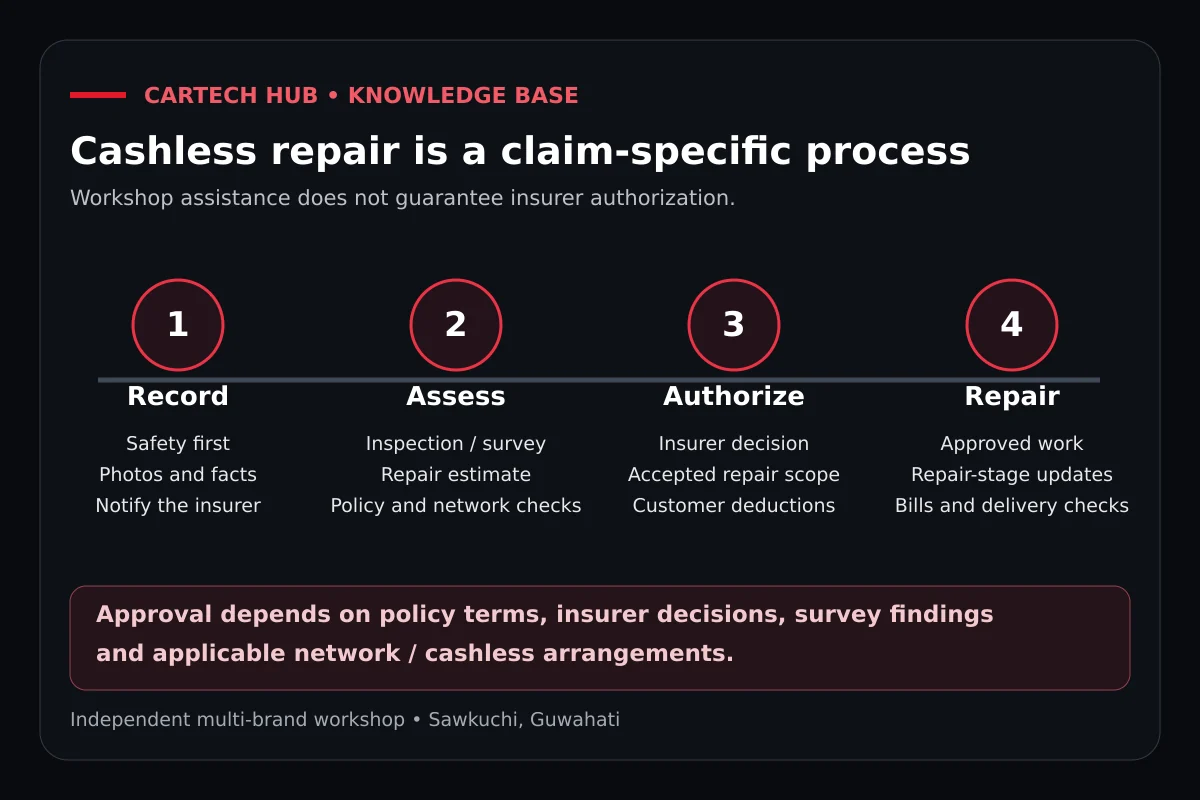
Ask the insurer whether a cashless or reimbursement route applies to the proposed workshop. Cashless requires policy eligibility, insurer approval, survey acceptance and confirmed workshop network status. CarTech Hub's SBI General cashless arrangement is confirmed; cashless claim assistance checks the policy and claim-specific authorisation before work begins.
Intimate the rear impact and preserve the reference
Inform SBI General through the current official channel on your policy or its claim information. Describe when and where the impact happened, who was driving and whether another vehicle was involved. Keep the claim reference and survey instructions with the workshop record. Report the tailgate symptom as an observation, without promising that it will be accepted as accident damage.
Gather the policy, RC, valid driver's licence, signed claim form, repair estimate and photographs. Take a rear overview and closer images of the lamps, bumper and tailgate gaps where safe. Supply an FIR or extra documents only when required by the incident or insurer. Later, the repair invoice and any relevant payment receipt form part of the final record.
Identify the Venue generation before pricing parts
The VIN, manufacturing year and variant determine which Venue rear parts should be investigated. Hyundai's manuals distinguish manufacturing periods, and a newer tail-lamp design should not be assumed to fit an earlier car. Identify the actual lens arrangement, connector, mounting and fitted parking or camera equipment before requesting a replacement quotation.
Assessment questions include whether the tailgate touches the surrounding body, whether a lamp has lost its mounting support and whether the luggage floor shows impact-related distortion. Suspected structural damage or restraint-system concerns need a qualified repair assessment and referral where necessary. Any affected driver-assistance equipment also requires a vehicle-specific specialist route; the model badge alone establishes neither equipment nor workshop capability.
Present repair choices for the insurer survey
A rear-end estimate should separately describe bumper work, tailgate repair or replacement, lamp findings, associated labour and the paint area. Record the reason for each choice. For example, a broken tail-lamp mounting may justify a different proposal from a superficial lens scratch. A closure problem should be inspected rather than hidden by improving the outer panel finish.
Keep the car ready for the survey and await insurer approval before insured dismantling or repair, unless SBI General specifically permits an earlier operation. Confirm whether the estimate is provisional and what the approved scope includes. An owner wanting extra cosmetic work should consent to that separate cost before it is added to the job.
Obtain supplementary approval for concealed damage
Authorised access behind a rear bumper can reveal a damaged support or additional deformation. Record what has become visible, photograph it and issue a supplementary estimate linked to the accident. Seek SBI General's further approval before extending insured repairs. Discuss any customer-paid portion of the proposed addition at the same point.
A change in scope can affect the completion plan, especially where the correct replacement part still needs confirmation. Ask which approval or sourcing item is pending. Avoid treating the original estimate as a guarantee that no further damage can appear, or treating every newly observed worn component as part of the collision.
Check water sealing, finish and the final bill
Complete the approved repairs, replacements and painting, then check relevant tailgate closure, lamp functions, panel fit and sealing. Where the repair has disturbed the rear closure or seals, an appropriate sealing check helps assess the finished work. Any continuing water entry or rattling should be discussed before handover, with the finding recorded.
Compare the final invoice with the insurer approvals and keep all requested final documents. Clarify deductibles, depreciation, nonpayable consumables and any customer-authorised extras. Confirm the insurer's release requirements and payment route before delivery. A cashless approval can still leave an owner contribution; a reimbursement enquiry needs clarity about payment first and the documents required for settlement.
Arrange a Venue claim review in Guwahati
Our SBI General document guide and insurance claim hub explain related preparation. Read the Venue service, parts and insurance article and Hyundai care information for broader ownership enquiries.
Call CarTech Hub on 9864770033 or WhatsApp the rear-impact details, mentioning closure difficulty, lamp damage and the claim reference if available. Read Hyundai owner reviews while planning the appointment. Parts, repair duration and cashless eligibility are confirmed after assessment and insurer review.
Quick answers
Should I keep pressing the tailgate closed if its latch no longer engages?
Avoid forcing an insecure closure. Describe the symptom and arrange assessment or recovery appropriate to the car’s condition.
Can a working rear camera establish that its mounting escaped damage?
No. A visible image does not confirm that the mounting or surrounding repaired area is correct. Identify the fitted equipment and inspect it as relevant to the impact.
Does rainwater in the boot after a rear impact belong in the claim enquiry?
Record when the water entry first appeared and where it is seen. The inspection should investigate whether accident damage or disturbed sealing explains it; coverage remains subject to evidence and policy assessment.
What if the insurer has accepted the bumper but has not decided on the tailgate?
Ask for the pending item to be identified clearly in the estimate and job plan. Obtain the required decision before treating that tailgate operation as approved insured work.