In this guide
Ferrari electrification does not describe one interchangeable powertrain. The plug-in systems used by the 296 and SF90 families, LaFerrari's HY-KERS performance hybrid, the F80's hybrid architecture and the battery-electric Luce require different ownership questions. A Ferrari hybrid or EV enquiry in Guwahati should identify the exact vehicle before discussing maintenance, parts or accident assessment with CarTech Hub – Multi-Brand Car Workshop, Guwahati.
Start with the difference between hybrid types
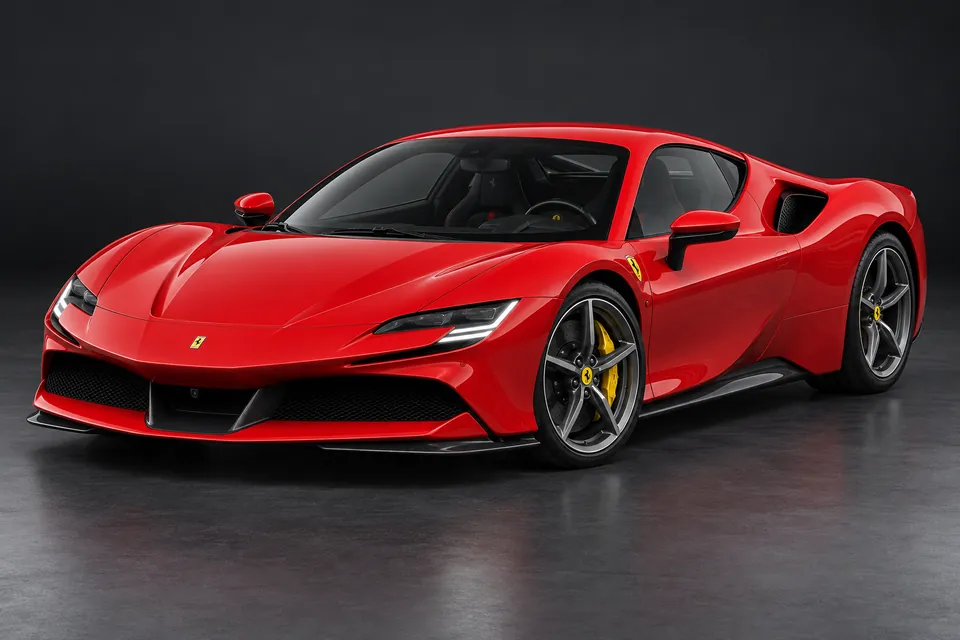
A plug-in hybrid combines a combustion engine with electric-drive equipment and an external charging arrangement. The 296 and SF90 families are examples, but their drive layouts must still be distinguished. A charge port on one car does not establish the motor arrangement, battery specification or service procedure of another.
LaFerrari uses Ferrari's HY-KERS terminology for its particular performance-hybrid design; it must not be described as simply another plug-in 296. F80 also needs its own verified architecture and operating information. Avoid promising electric-only travel, an external charging port or a universal charging routine for every hybrid bearing the Ferrari name.
Luce is a battery-electric vehicle
Ferrari Luce is a named fully electric model, rather than a petrol service package with a different badge. Combustion-engine oil filters, spark plugs, petrol injectors and ordinary clutch-service assumptions do not belong on its maintenance checklist. Indian availability, the particular vehicle's registration and workshop support require their own verification and are not established by a global announcement.
Battery, motor, inverter, drive-unit, charging and thermal-management details should be taken from the current documentation for the vehicle supplied. This guide deliberately does not offer a generic battery capacity, range, charging time or service interval. Those figures are useful only when the version, test basis and actual equipment are clear.
Low voltage and high voltage have different roles
The low-voltage system supports applicable vehicle electronics, while the traction-energy system supplies electric propulsion. A low-voltage warning is not, by itself, a diagnosis of a failed traction battery. Record the exact message, the operating situation and whether the car can be safely left stationary while obtaining advice.
High-voltage cables, connectors, the battery enclosure, power electronics and thermal-management equipment require vehicle-specific procedures. A visual check from a safe position does not establish electrical isolation or internal battery condition. This article supplies no instructions for opening batteries, disconnecting high-voltage systems or attempting an electrical repair.
Brakes, tyres and cooling still matter
Regenerative braking recovers energy through the electric drive, while friction brakes continue to perform essential functions. Brake-pad or disc assessment must account for the actual braking system and prescribed procedures. The presence of regeneration does not eliminate tyre, wheel, steering, suspension or friction-brake inspection.
Thermal management supports components that operate under different demands. Coolant circuits and AC-related equipment should not be assumed to serve the same purpose on every Ferrari. Parts identification must distinguish the engine, cabin and electrified systems where fitted, with the correct technical information before any work is accepted.
Define the supported task before transport or collision repair
An owner can ask about an appropriate general inspection, external body or glass concern, brake or tyre issue, low-voltage symptom, or documentation assistance. CarTech Hub must first confirm the exact task, technical access and any qualified specialist arrangement. This guide does not advertise traction-battery opening, cell repair, motor or inverter rebuilding, charging-system repair or factory software programming.
After a collision or underbody strike, electrical safety and the condition of affected systems must be established before lifting, body repair or paint work. Insurer approval and a repair estimate do not provide high-voltage clearance. Record the incident, use suitable recovery guidance and confirm who will perform the necessary specialist assessment before the vehicle is delivered for further work.
Manufacturer references
- Official Ferrari reference 1
- Official Ferrari reference 2
- Official Ferrari reference 3
- Official Ferrari reference 4
- Official Ferrari reference 5
Quick answers
Are all Ferrari hybrids plug-in vehicles?
No. The 296 and SF90 plug-in systems, LaFerrari HY-KERS and F80 architecture must be described individually.
Does Luce need petrol-engine maintenance?
No. It is battery electric; only applicable EV maintenance and the correct vehicle documentation should guide its checklist.
Does an insurer-approved estimate establish electrical safety?
No. Appropriate high-voltage assessment and clearance are separate technical requirements before affected collision work.