
In this guide
Cooling that changed after a collision needs context
If cabin cooling deteriorates after a front impact, tell the workshop exactly when it changed. The AC condenser releases heat from the refrigerant circuit and is exposed near the vehicle's front. Accident damage can affect its core, mounting points or connections, but a warm cabin alone does not identify the failed component.
CarTech Hub – Multi-Brand Car Workshop, Guwahati can discuss AC concerns alongside the body-damage assessment. Explain whether airflow remains strong, whether cooling changes in traffic and whether a warning or unusual noise appeared. These observations help separate a refrigerant-circuit concern from a blower, fan, electrical or unrelated cooling issue; they are not a remote diagnosis.
Inspect the front assembly before ordering parts
A condenser can be affected by a bumper bracket or neighbouring part that has moved into it. The workshop should review its supports, available clearance and the associated damaged area. Replacing one visible component without considering what struck it may leave the cause of damage unresolved.
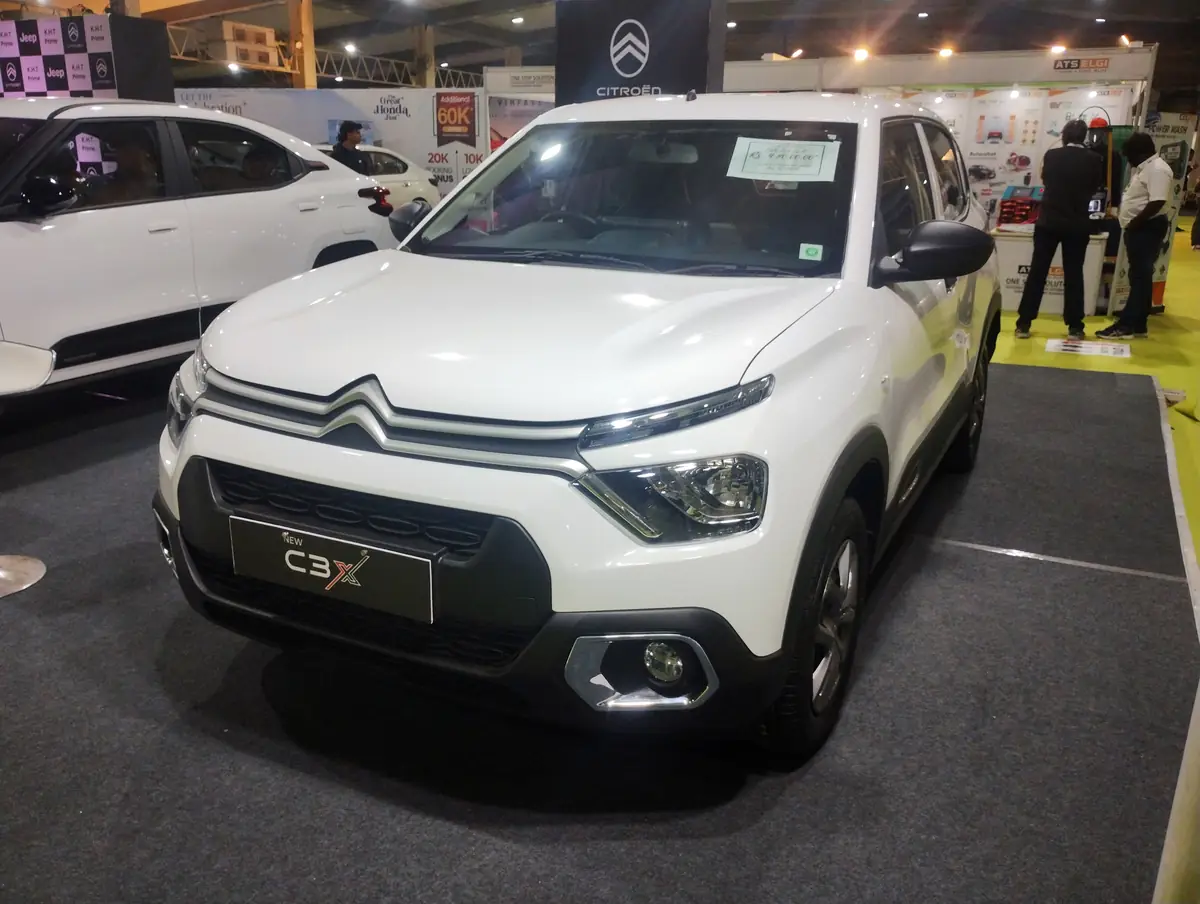
On a C3X, AircrossX or BasaltX, the actual engine, transmission and equipment details should accompany the request. The C5 Aircross has a different vehicle architecture. An ë-C3 also requires electric-vehicle procedures; ordinary combustion AC practice must not be assumed suitable for every electric compressor or electrical connection.
Match the assembly and service specification
Condenser dimensions and connection arrangements need verification against the vehicle, not a generic Citroën search result. The correct refrigerant specification, approved lubricant requirements and suitable servicing procedure must be confirmed before work is accepted. This page does not recommend a universal refrigerant quantity, lubricant or top-up method.
Repair decisions need an identified defect
Ask whether the proposal addresses physical damage, a confirmed leak, mounting failure or another finding. Any replacement estimate should identify compatible seals and other parts needed for the approved operation. CarTech Hub confirms capability, equipment availability and the proposed job scope before accepting specialist work.
Refrigerant work requires proper equipment and handling procedures. Repeatedly adding gas without finding the reason for poor cooling is not a useful accident-repair plan. Neither the customer nor an untrained helper should loosen refrigerant connections to look for pressure or attempt a home repair.
Document accident-related AC damage accurately
Photographs of the damaged front area and a description of the first cooling symptoms can support the claim file. Distinguish new impact damage from earlier AC complaints. If a component cannot be assessed until access is available, record that limitation and follow the insurer's inspection and approval instructions.
Use the official insurer claim-intimation link and retain the reference. The policy, registration, relevant driving licence, incident details and photographs are common starting points, but the insurer may need different or additional evidence. Survey arrangements, estimate submission and supplementary approval depend on the claim circumstances. Do not assume that a body-panel approval automatically authorises every AC component.
Explain cashless eligibility and customer contributions
Citroën accident repair and insurance claim assistance are available through CarTech Hub enquiries in Guwahati. Cashless repair is conditional on the insurer, policy terms, survey, approval and confirmed workshop or network eligibility. Where that arrangement has not been checked, the correct description is claim assistance with cashless eligibility to be confirmed.
The customer may still need to pay deductibles, applicable depreciation and other non-covered or unapproved items. An add-on cover does not remove the need to read its conditions. Ask for the proposed work and likely customer contribution to be explained before authorisation; a general website guide cannot promise a settlement amount.
What to ask when collecting the vehicle
Request an explanation of the AC work completed and the checks performed for the accepted scope. Discuss airflow, cooling performance, abnormal sounds and any remaining warnings. Painting the bumper or making the exterior look straight does not demonstrate that the AC circuit has been checked.
Keep the estimate, approvals and final repair documents together. If cooling changes again, share the repair reference and circumstances with the workshop rather than requesting a repeat gas charge without assessment. Book an inspection or send an insurance enquiry to CarTech Hub with the actual model and incident details; nearby owners searching for Citroen AC repair can use the same route without creating a separate spelling-based page.
Official insurer claim channels
Choose your insurer’s official claim-intimation link. Submit policy and identity information directly through the insurer’s approved channel. Its process and cashless authorization remain subject to your policy and the assessed claim.
Quick answers
Is every AC problem after an accident a condenser leak?
No. The condenser, fan, blower, electrical supply and other components have different roles. The timing and symptoms guide an inspection; they do not prove a particular failure.
Can a condenser be selected only by the Citroën badge?
No. The model, build, engine or electric powertrain and fitted connections must be verified. Compatibility and availability are confirmed for the actual vehicle.
Does bumper approval include the condenser automatically?
Not necessarily. The claim estimate should identify the condenser findings and obtain the required approval for that damage. Customer and insurer authorisation may need updating.
Vehicle and claim reference information
Use the manual for your exact vehicle and the issued insurance policy. These sources provide background and do not establish a workshop authorization or insurer tie-up.