In this guide
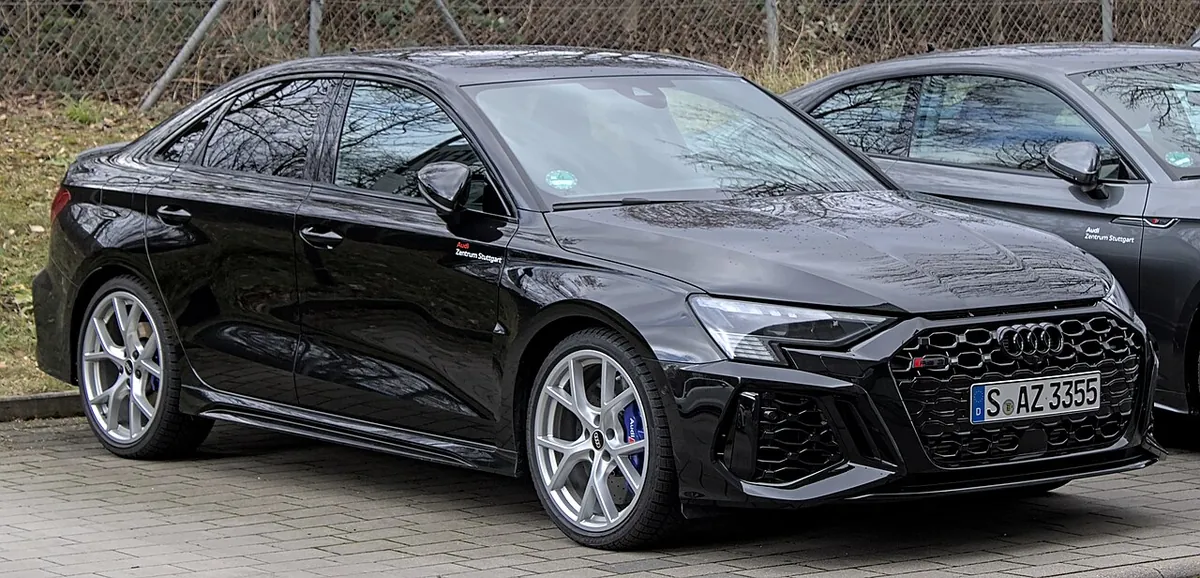
An imported Audi RS 3 may share a compact-car outline with an A3, yet its five-cylinder powertrain and performance equipment need their own service enquiry. CarTech Hub – Multi-Brand Car Workshop, Guwahati helps owners plan applicable checks and compatible-parts assessment without presenting an unverified import as a current Indian new-car offer. Share generation, market documents, mileage and fitted equipment through CarTech Hub contact. The accepted workshop scope follows that evidence, with specialist transmission, drivetrain and electronic requirements identified before parts or repairs are committed.
Identify body, generation and rear-drive distribution
RS 3 Sedan and Sportback have different rear bodies, glazing and closure parts. The familiar 2.5 TFSI five-cylinder engine and seven-speed S tronic are relevant manufacturer configurations, but the actual generation still matters. Audi introduced the RS torque splitter in 2021; earlier RS 3 vehicles must not be described or serviced as if they automatically carry the later equipment.
Current official Indian model listings do not verify domestic RS 3 supply. A global technical update is educational context, not evidence of local stock, compatible retrofit parts or CarTech Hub specialist support. The Audi guide collection connects related owner information while vehicle-specific documents remain the reference for this import.
Separate periodic requirements from optional performance work
Use manufacturer instructions for the actual market build, its maintenance display where fitted and previous invoices. Engine oil must have the correct approval; oil, air and cabin filters need matching references. Spark plugs and ignition components follow prescribed guidance and diagnosed condition. There is no one service interval or torque-splitter fluid rule that can be applied across every generation solely from the RS badge.
Review tyre condition and actual front/rear sizes, brake behaviour, coolant observations and battery health before a longer Assam trip. Monsoon preparation includes visibility and any sealing concerns. These checks support ordinary ownership; they do not imply ECU tuning, output upgrades, track preparation or modification calibration at the workshop.
Diagnose the five-cylinder engine before buying components
Record a misfire, warning, boost concern or coolant loss with its operating conditions. Supported inspection and fault information guide further checks; they do not prove that a turbocharger, injector or sensor has failed. Petrol plugs, coils, intake connections, mounts, cooling hoses, radiator and pump-related parts are considered against the identified engine and findings. An ordinary A3 list is not sufficient to establish every RS component reference.
Cooling damage after an impact follows the accident route rather than a guessed maintenance repair. Discuss which diagnostic operations can be accepted and which require a specialist provider. Engine rebuilding, turbo restoration and proprietary electronic procedures are not advertised as universal CarTech Hub capabilities.
Check the brake and chassis package explicitly
Performance brake material and equipment vary. Identify the actual discs, pads, calipers and sensors before ordering; a ceramic component requires its appropriate assessment and does not imply refurbishment support. Suspension arms, links, bushes, bearings, steering components and fitted dampers are inspected in response to condition and symptoms. Wheel compatibility includes clearance around the actual brakes, as explained in the Audi wheel assessment guide.
A shudder or knock may involve tyres, mounts, shafts or other causes. S tronic internals, a newer torque splitter or earlier drivetrain equipment require the right specialist route. A general inspection does not establish internal repair, protected adaptation or performance-control programming capability.
Source parts using the imported vehicle's identity
The estimate should record the relevant component reference, body, axle or side and installed package. Filters, mounts, cooling parts, brake consumables, lamps and panels have different verification needs. Price, technical compatibility, sourcing and delivery time are confirmed after assessment. A part advertised for an A3 or another RS 3 generation must not be purchased solely because it looks similar or carries a shared badge.
Cabin cooling and low-voltage complaints require supported airflow, leakage or electrical assessment, with prescribed setup identified. Specialist equipment, security functions, assistance calibration and restraint-system work may require referral. Any relevant electrified-system safety requirements are checked on the actual build rather than assumed from overseas news.
Plan the service appointment and accident pathway
For incident-related damage, the RS 3 accident and claim guide explains the different evidence and approval process. The Audi insurer directory contains official reporting facilities or guidance; a workshop claim enquiry is assistance rather than insurer registration. Imported/performance vehicle acceptance and cashless eligibility require individual confirmation, with policy-dependent charges potentially payable.
Book an RS 3 assessment enquiry with import documents, previous work and symptoms. Confirm which checks are accepted, which parts remain subject to sourcing and what specialist support is necessary. Keep the resulting inspection and repair records. Google Reviews and directions provide CarTech Hub's official Guwahati profile and location options.
Official insurer claim channels
Audi policy evidence and official claim channels: a general motor policy or an EV product page does not prove acceptance of this premium vehicle, approved parts, battery cover or CarTech Hub cashless eligibility. Confirm registration, declared use, insured value and repair scope with the insurer.
Choose your insurer’s official claim-intimation link. Submit policy and identity information directly through the insurer’s approved channel. Its process and cashless authorization remain subject to your policy and the assessed claim.
Quick answers
Does every RS 3 have the newer torque splitter?
No. Audi introduced that system in 2021. Earlier cars require their actual rear-drive architecture and maintenance references.
Can RS 3 Sedan rear panels be ordered for a Sportback?
Do not assume compatibility. The body style, generation and affected component references must be matched.
Does this RS 3 guide advertise tuning or ceramic-disc refurbishment?
No. Applicable inspection and compatible-parts assistance do not establish specialist performance modification or ceramic restoration capability.
Vehicle and claim reference information
Use the manual for your exact vehicle and the issued insurance policy. These sources provide background and do not establish a workshop authorization or insurer tie-up.