In this guide
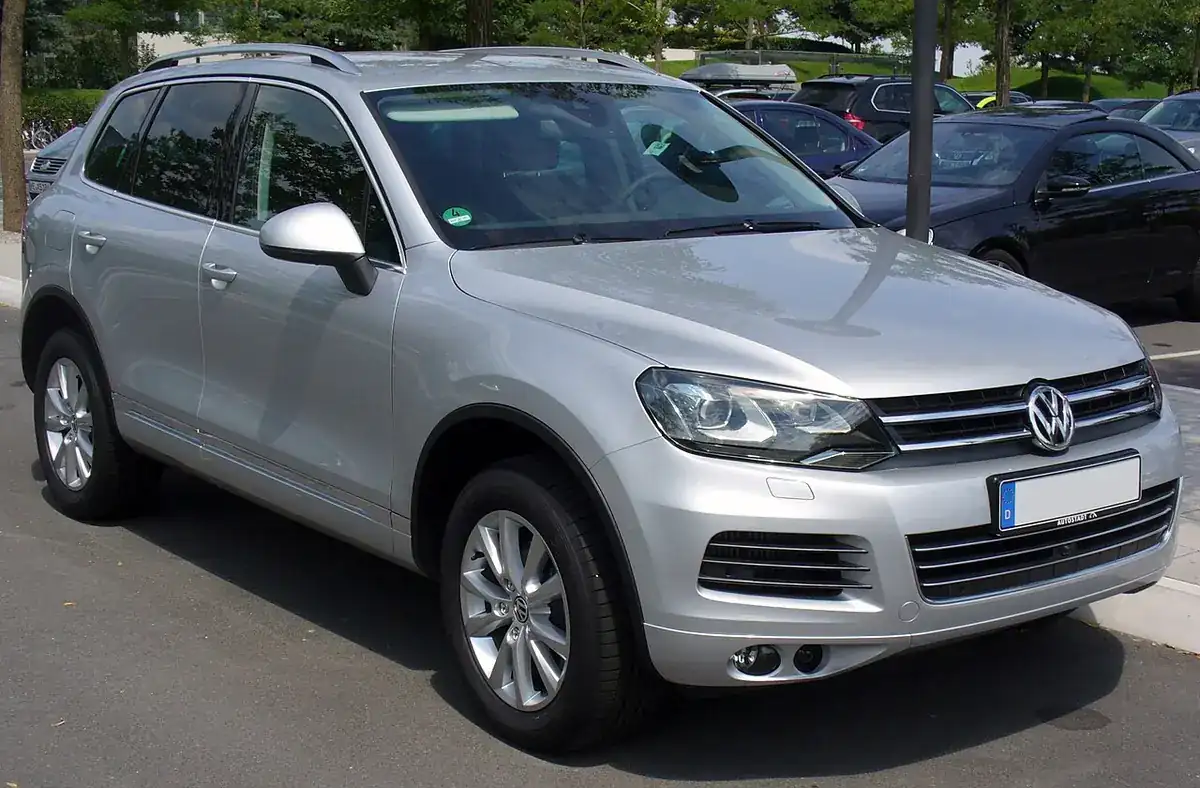
A Touareg enquiry should establish the vehicle and technical scope before promising a repair. CarTech Hub – Multi-Brand Car Workshop, Guwahati helps owners organise initial driveline, suspension and accident-damage assessment for this older imported SUV, with specialist requirements confirmed individually.
Identify the imported Touareg accurately
Relevant older Touaregs can belong to different generations, commonly identified by 7L or 7P vehicle information. Manufacturer descriptions of later overseas models are not a substitute for identifying an older Indian vehicle. Engine, automatic transmission, driveline and suspension equipment must be verified from the chassis and installed components before service advice or parts selection.
Volkswagen's historical material distinguishes the first and second generations and shows that suspension equipment varied. Do not assume every Touareg has air suspension, nor apply one generation's transmission or drivetrain description to another. Share service records, known equipment information and photographs of the actual car with the Touareg model enquiry.
Describe the movement, noise or warning
Useful details include whether a vibration appears at a road speed, during acceleration, on a turn or while stationary. A clunk over a bump differs from a transmission-selection delay. Record a steering change, ride-height observation or warning message separately, and mention recent tyre work, towing use, underbody contact or a wheel impact where relevant.
Do not continue testing a severe vibration, steering concern or drivetrain warning on public roads. Stop safely when the vehicle's instructions or condition require it, and obtain transport advice. Pictures can preserve information, but they cannot establish the condition of a shaft, bearing or suspension system without appropriate inspection.
Tyres and wheels as the first physical context
Tyre condition, fitted specification, pressures and wheel damage influence ride and driveline impressions. Verify the vehicle's requirements before fitting replacements, and disclose changes from the original arrangement. A damaged tyre or wheel can create a vibration that is wrongly labelled a gearbox fault. Inspection should therefore connect road-speed symptoms to the whole affected area.
After a curb or pothole impact, examine more than the visible alloy mark. The relevant wheel, tyre, fastenings, bearing, steering and suspension observations belong to the assessment. Alignment alone does not repair damaged components. Use the handbook for loading and pressure guidance rather than copying a requirement from another premium SUV.
Driveshaft, propeller shaft and mounting assessment
The actual driveline determines which shafts, joints, supports and mounts are relevant. Inspection can consider accessible damage, leakage and related wear findings within the supported scope. A front CV-joint concern is not the same component as a propeller-shaft problem, and not every vibration proves either has failed.
Match the symptom to evidence
State whether the noise changes when steering, accelerating or easing off. Recent engine or transmission work can make mounting history important. Appropriate diagnosis should explain the observed finding and proposed next step before replacement. Advanced transmission, transfer or differential procedures require confirmed tools, technical information and expertise; an initial inspection is not a blanket promise of rebuilding.
Conventional or air suspension requires verification
Identify whether the SUV has conventional spring equipment, air suspension or another fitted arrangement before listing a shock absorber, spring, air unit or control component. A vehicle's stance in a photograph does not reliably identify the system. Component numbers, technical information and inspection are needed to avoid applying a generic Touareg replacement package.
If a height-related warning or unusual parked stance is reported, record when it occurs and the conditions without diagnosing one failed air component from appearance. Electrical supply, sensor or physical-system evaluation may be relevant according to the installed equipment. Specialised height-setting, calibration or pressure-system work needs suitable capability, confirmed before any procedure is accepted.
Brake, steering and supporting service concerns
Brakes and steering should be reported alongside a ride or driveline complaint if their operation has changed. Assessment can consider the installed brake components, hoses, related warning information and applicable steering joints or rack condition. A brake concern requires timely attention and should not be deferred because the owner first requested suspension work.
Routine engine and filter maintenance, cooling performance, AC operation and battery-health checks remain part of the vehicle's wider care. They follow the actual powertrain and guidance. Keep a clear distinction between a maintenance task, an observed fault and specialist work requiring referral. A complex SUV should not receive an unexplained all-inclusive service description that hides those differences.
Compatible parts and maintenance updates
Depending on verified findings, an enquiry can concern mounts, applicable shafts and joints, bearings, suspension arms, bushes, dampers or other correctly identified suspension equipment. Braking and steering components likewise need exact fitment. Electrical or height-control parts should not be ordered only because a warning names the affected system.
Part availability, technical compatibility, price and delivery time will be confirmed after verification of the Volkswagen model, variant and required component. Record dates, mileage, part identification and completed work. Maintenance requirements depend on age, usage, engine, transmission and manufacturer guidance; there is no universal oil or driveline-fluid interval for every Touareg generation and fitted system.
Impact damage and the insurance assessment
A wheel-area or underbody collision can affect several connected systems. The inspection should record visible damage and supported findings, then separate accident-related repairs from age-related wear. Body work may also be needed around the fender, bumper or attachments. Structural work, restraint-system restoration and advanced driveline or suspension procedures require appropriate specialist support, confirmed before acceptance.
CarTech Hub Multi-Brand Workshop, Guwahati provides Volkswagen accident repair and motor insurance claim assistance. Cashless repair availability is subject to the insurer, policy conditions, vehicle survey, claim approval and confirmed workshop or network eligibility.
Register the claim through the official insurer links and retain the reference. Prepare the policy, registration, requested licence information, photographs and accident account. Survey findings and authorisation establish covered work; further damage may need a supplementary estimate. Deductibles, depreciation and excluded items can remain payable. Consult the Touareg accident guide before authorising claim-related work.
Confirm the visit and supported scope
Book an assessment with chassis details, installed equipment and the symptoms, or WhatsApp the records. Call CarTech Hub before transporting a Touareg with a serious fault. Use the insurance enquiry form for collision questions; Google Reviews and directions support planning. The workshop offers independent multi-brand assistance, and acceptance of imported-model specialist work depends on verified capability and the individual vehicle.
Official insurer claim channels
Choose your insurer’s official claim-intimation link. Submit policy and identity information directly through the insurer’s approved channel. Its process and cashless authorization remain subject to your policy and the assessed claim.
Quick answers
Can a 7L or 7P badge prove that a Touareg has air suspension?
No universal fitment is assumed. Identify the generation, chassis and installed equipment before selecting conventional or air-suspension components and procedures.
Can an unusual Touareg parked height identify the failed component?
Appearance alone is insufficient. Record when the change occurs and any warning, then arrange assessment of the fitted physical and control systems within a confirmed technical scope.
Why inspect tyres before concluding a Touareg driveline fault?
Tyre or wheel damage can influence vibration and handling. Inspecting the fitted specification and affected wheel area helps relate the symptom to evidence before gearbox or shaft parts are proposed.
Is specialist Touareg suspension calibration included in every appointment?
No. The required procedure, equipment, information and trained capability must be confirmed separately. Initial assessment may identify a need for a suitably equipped specialist.
Vehicle and claim reference information
Use the manual for your exact vehicle and the issued insurance policy. These sources provide background and do not establish a workshop authorization or insurer tie-up.