In this guide
“The clutch is gone” is often a driver's description rather than a diagnosis. A car may hesitate, struggle to select a gear or feel different when moving away, but those complaints do not always have the same cause. Maruti Suzuki owners looking for clutch repair in Guwahati should begin with the exact transmission type and an account of when the symptom occurs.
A clutch pedal is only one part of the story
In a manual vehicle, the driver operates the clutch. An automated manual transmission, often described as AMT or AGS, operates a manual-type gearbox and clutch through an automated system. A pedal complaint and an automated engagement complaint therefore need different checks. Conventional automatic and other transmission designs should not be treated as a manual clutch kit under another name.
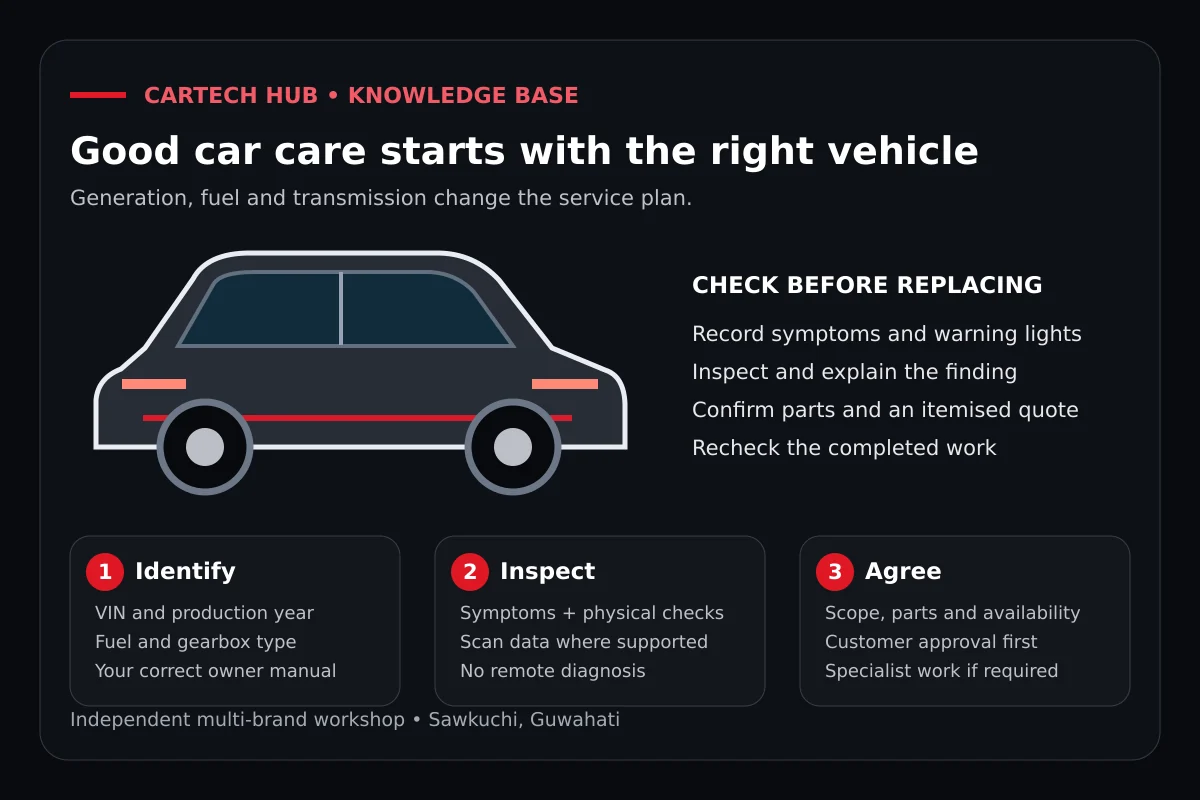
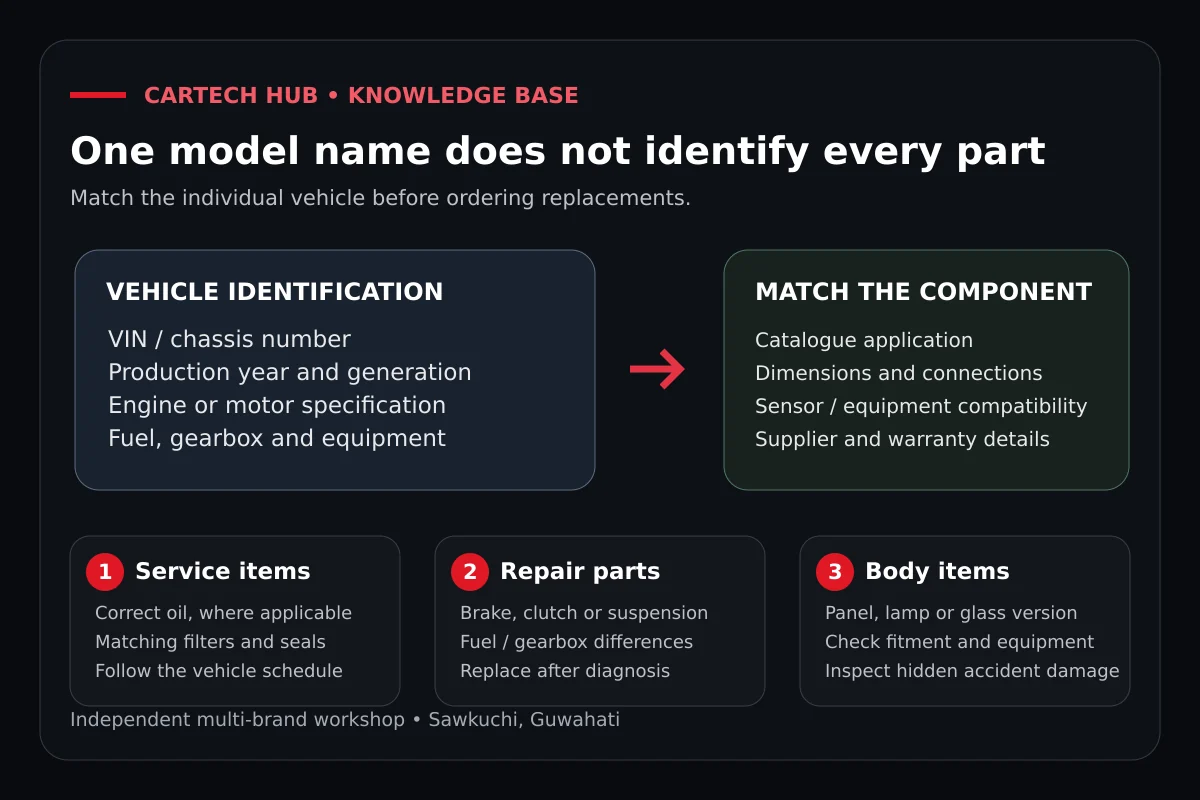
The model badge alone cannot identify that system. A Swift or Celerio may have different drivetrain options across generations and variants. Use the registration and vehicle details to establish what is actually fitted before discussing repair parts.
Describe three kinds of change separately
Drive does not match engine response
If engine speed rises without the expected increase in road speed, report the circumstances. Do not deliberately provoke slipping under heavy load to prove it. The workshop needs to consider the friction assembly and possible related causes, including contamination or an operating-system problem, rather than assuming wear is the only explanation.
Selecting or engaging a gear is difficult
Difficulty engaging a gear can involve the release system or other transmission-related issues. Note whether the engine is running, whether several gears are affected and whether the symptom is new after a repair. Avoid forcing the lever or repeatedly attempting to drive through a severe fault.
Moving away produces a shudder
Describe whether the shudder is felt cold, hot, in reverse or on an incline. Mounts, operating conditions and clutch-related findings may need to be considered. An AMT warning or unusual gear-selection display should be recorded exactly, with a photograph taken only when safely parked.
Ask what the inspection will cover
A sensible assessment connects the driver complaint with the actuation system, related mechanical condition and any relevant electronic information. For an automated system, compatible diagnostic support and the manufacturer's required setup procedures may be necessary. Do not assume that replacing friction parts alone will solve a control or actuator concern.
Before authorising dismantling, ask what is already known, what can only be confirmed after removal and how the revised estimate will be approved. A proposed kit should be matched to the exact vehicle. Ask whether related bearings, operating components, mounts or leakage need attention and why. Replacing every neighbouring part without a finding is no more useful than ignoring a related cause.
Think about repeat use in traffic
Use the instructions supplied for your own transmission when waiting in traffic, starting on hills or parking. Do not hold a manual car on a slope by slipping the clutch. Avoid importing another vehicle's AMT operating advice without checking the manual. Guwahati stop-start journeys make it particularly useful to discuss how the symptom appears after the vehicle has warmed up.
Read the Swift service guide and Celerio service guide, or continue with our parts-fitment article. CarTech Hub's gearbox information explains the wider repair context.
Book the correct assessment
CarTech Hub offers independent multi-brand service discussions in Guwahati; it does not claim authorised Maruti Suzuki status. Confirm that the workshop can support your particular transmission and any required diagnostic procedure before visiting. If engagement becomes unpredictable or the vehicle cannot be controlled safely, arrange suitable recovery rather than continuing to test it.
Book a workshop appointment, call +91 98647 70033 or WhatsApp your vehicle details. Include manual or AMT identification, the main symptom and any previous clutch work.
Primary reference information
- ZF Aftermarket clutch-slipping guidance
- ZF Aftermarket clutch disengagement guidance
- Maruti Suzuki official owner manuals
These references support general owner education. Confirm the guidance for the actual vehicle before approving work.
Quick answers
Does every Maruti automatic use the same clutch assembly?
No. Automatic transmission designs differ, and even AMT components vary by vehicle. Identify the actual transmission and match parts and procedures.
Can a new clutch still slip?
Yes. Wear is only one possible cause. Incorrect fitment, contamination or a release-system concern can require investigation, depending on the vehicle.