
In this guide
Thar care starts with the vehicle you actually own
A Mahindra Thar used for weekday travel in Guwahati can have a different repair history from one regularly taken beyond paved roads. Tell CarTech Hub about the journeys, modifications and symptom that brought you in. A useful estimate begins with that history and a physical inspection, then separates routine maintenance, diagnosed faults and accident damage.
Mahindra's current official three-door listing uses the Thar OG name. Earlier Thars, the 2023 RWD additions and the newer update should not share an assumed parts list. This guide covers ownership enquiries; it does not promise identical equipment across them.
Confirm the engine, roof and drive arrangement
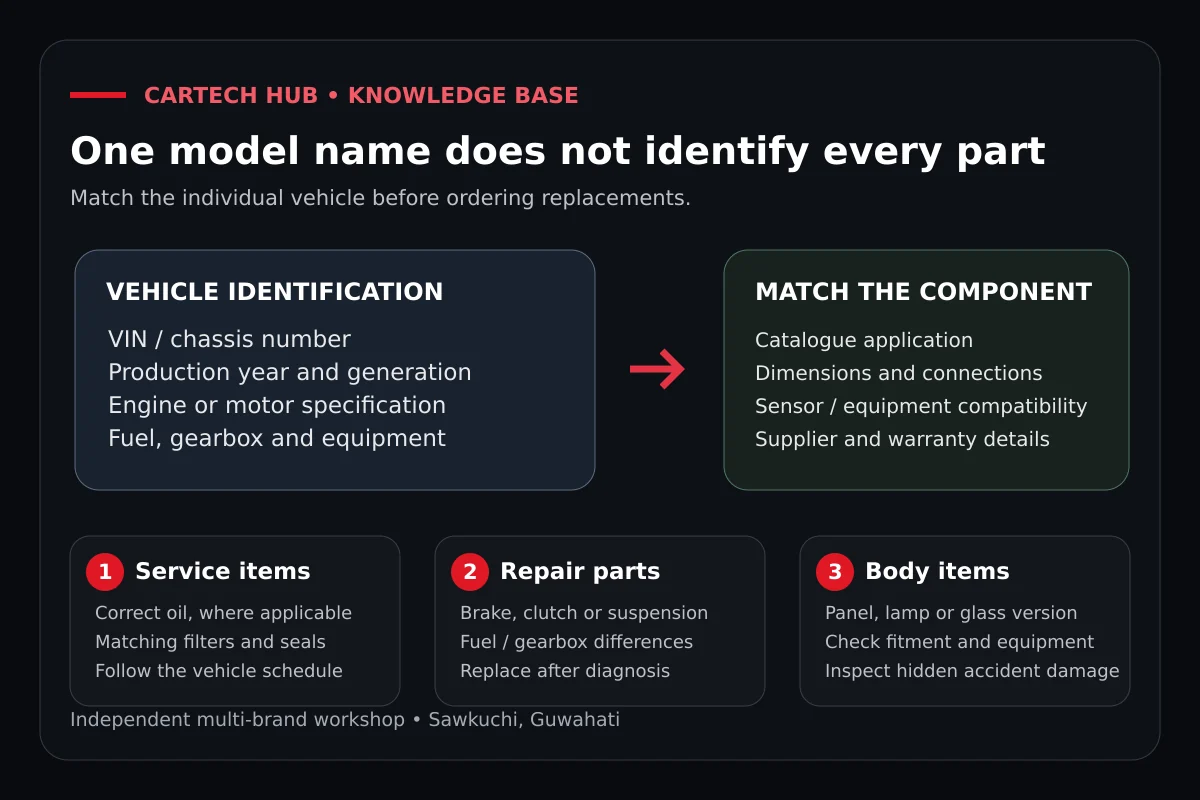
Supply the VIN, manufacturing year, registration details, fuel, gearbox and fitted roof type. Photographs can help identify changed bumpers, wheels or accessories. Mahindra has offered petrol and diesel Thars with manual or automatic gearboxes and RWD or 4WD configurations; the exact combination matters.
Filters, lamps, ORVMs, wheel bearings and body fittings must be checked against the applicable vehicle. Ask for the proposed parts description, sourcing route and expected lead time. Genuine or suitable alternative availability needs confirmation before approval; a Thar badge alone cannot establish fitment.
Build servicing around the correct manual
Use the schedule and fluid specifications for the actual Thar, considering both time and distance. Engine oil, the oil filter, air filtration and applicable fuel or cabin filters belong in that discussion. Petrol spark plugs and ignition checks differ from diesel glow-plug and injection diagnosis. No universal oil grade or replacement interval is prescribed here.
Record short traffic journeys, dusty use and long periods parked. For Guwahati's rainy season, inspect tyres, wipers, visible leaks and lighting. After water exposure, describe the level and duration; avoid repeated starting if water ingestion is suspected and arrange an assessment.
Investigate power, temperature and shifting complaints
Note whether a loss of power follows a cold start, heavy load or a warning message. Engine inspection may assess intake hoses, applicable turbo plumbing, sensors, fuel delivery and electrical supplies before recommending an assembly. Cooling checks can involve the radiator, fan, thermostat, water pump and hoses when findings justify them.
On a manual, clutch slip, pedal changes or selection difficulty may involve the clutch plate, pressure plate, release mechanism or other fitted components. An automatic needs its own fault assessment, leak checks and specified procedures. A gearbox replacement should follow evidence and an agreed estimate.
Inspect the underside after demanding use
Brake pads, discs, any fitted drums and shoes, hydraulic lines and ABS-related faults require the correct inspection. Suspension bushes, arms, shock absorbers, joints and steering connections are checked for wear or impact. Describe a vibration by speed, acceleration and road surface; this helps assess tyres, bearings and driveline components.
Only an applicable 4WD Thar has the relevant transfer and front-drive equipment. Differential, propeller-shaft or 4x4 overhaul work requires confirmed workshop capability and a defined scope. AC diagnosis should distinguish weak airflow from refrigerant leakage or compressor faults; battery, charging, starter and wiring checks address electrical complaints separately.
Look beyond an obvious bumper scrape
A collision assessment examines brackets, lamps, fenders, bonnet alignment and the cooling area after a front impact. Side or rear contact can involve doors, quarter panels, tailgate, spare-wheel mounting, glass and concealed attachments. Panel repair or replacement follows the damage findings.
Paint preparation, corrosion protection and panel-fit checks should appear in the agreed scope. Airbag, restraint or structural concerns require suitable equipment and competence to be confirmed; referral may be necessary. Attractive paintwork alone cannot establish safe completion.
Prepare the claim before repair decisions
Notify the insurer promptly and discuss claim assistance. Bring the policy, RC, relevant driving licence, claim form and damage photographs; supply an FIR or further documents when requested. Preserve evidence and arrange the survey before dismantling or repair unless the insurer authorises otherwise, including any emergency protective measures.
The estimate distinguishes accidental damage potentially considered under own-damage cover from wear, servicing and unrelated faults. The insurer decides coverage, assessed repair versus replacement and the approved scope. Additional concealed damage may need reassessment. Before delivery, agree quality checks, completed work and outstanding concerns.
Understand the cashless decision and your share
For policies from HDFC ERGO or ICICI Lombard, confirm this workshop's current network eligibility for the particular claim. Naming an insurer does not establish a CarTech Hub partnership. Cashless processing remains subject to policy cover, approval, survey requirements and network status.
Ask for the estimated owner contribution: deductibles, applicable depreciation, exclusions and unapproved work can remain payable. A zero-depreciation or other add-on follows its wording and limits; it does not make every repair free.
Arrange a focused Thar enquiry in Guwahati
CarTech Hub is an independent multi-brand workshop, not an authorised Mahindra service centre. Confirm technical scope and parts availability before visiting. Explore the Mahindra model directory, car service options, Thar ROXX ownership guide and Mahindra customer reviews.
Book a service discussion, call +91 98647 70033 or send a WhatsApp enquiry with the year, variant and complaint.
Quick answers
Should a RWD Thar receive a 4WD service quotation?
No. Identify the fitted driveline from the VIN and vehicle. Transfer-system and front-drive checks apply only to relevant 4WD equipment; ordinary tyre, brake and suspension needs still require assessment.
Can a Thar OG part be fitted to my earlier Thar?
Compatibility needs checking against the original vehicle and proposed part. The updated nameplate does not prove that lamps, suspension, steering or body fittings interchange.
What should I report after taking my Thar through water?
Describe the water level, duration, whether the engine stopped and any new warning or noise. If ingestion is suspected, avoid repeated starts and arrange safe assessment rather than treating exposure as routine servicing.
Will off-road damage automatically qualify for a Thar insurance claim?
No. The insurer assesses the event, policy cover, use conditions and exclusions. Inspection and a repair estimate support the discussion but cannot guarantee admissibility or cashless approval.