In this guide
After a rear impact, a Sonet may look as though it needs only a bumper repaint while the tailgate feels harder to close. In this example, an owner in Guwahati notices both symptoms after being struck in traffic. CarTech Hub can organise a rear-body inspection and assist with a Tata AIG claim enquiry. The article explains a possible repair journey, not a guaranteed insured outcome or a statement that every Sonet has the same rear equipment.
Preserve the rear-impact evidence
Prioritise people and traffic safety, then record the incident and contact Tata AIG through its official claim service promptly. Photograph the rear bumper, tailgate, lights and both rear quarters from safe positions. Note a new exhaust noise, reversing warning or closure problem without trying to straighten the panel yourself. Seek recovery guidance if lights, tyres, fluids or body security make travel unsafe. Keep the other vehicle's available details and obtain police documentation when the circumstances or applicable requirements call for it.
Look beyond the bumper cover
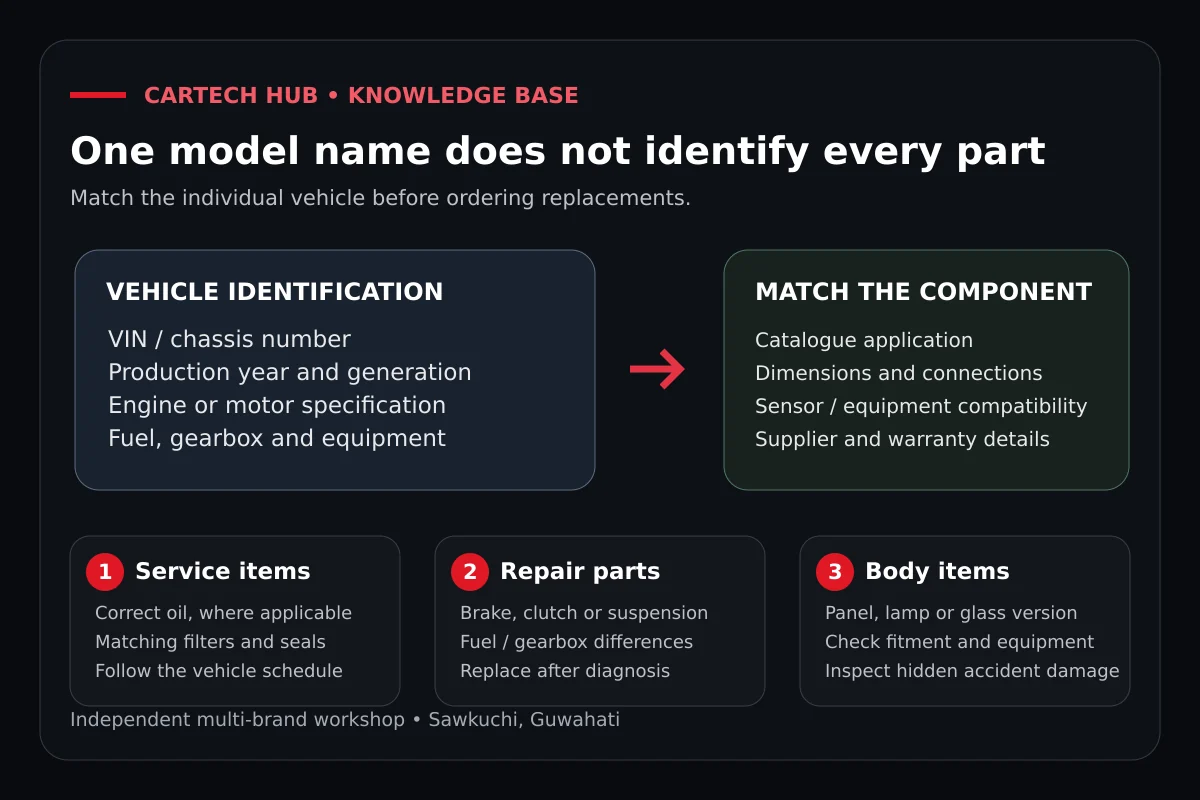
A Sonet assessment may involve bumper brackets, reinforcement, tailgate latch alignment, lamp mountings and the surrounding body, depending on the impact. Reversing sensors or a camera require inspection if fitted and affected. Different production years and trims can use different components, so VIN-based identification precedes sourcing. A damaged exhaust or body mounting must be evaluated rather than labelled cosmetic. If the rear floor, restraints or structural geometry may be involved, CarTech Hub should confirm specialist capability or coordinate referral before promising a complete restoration.
Understand the Tata AIG claim route
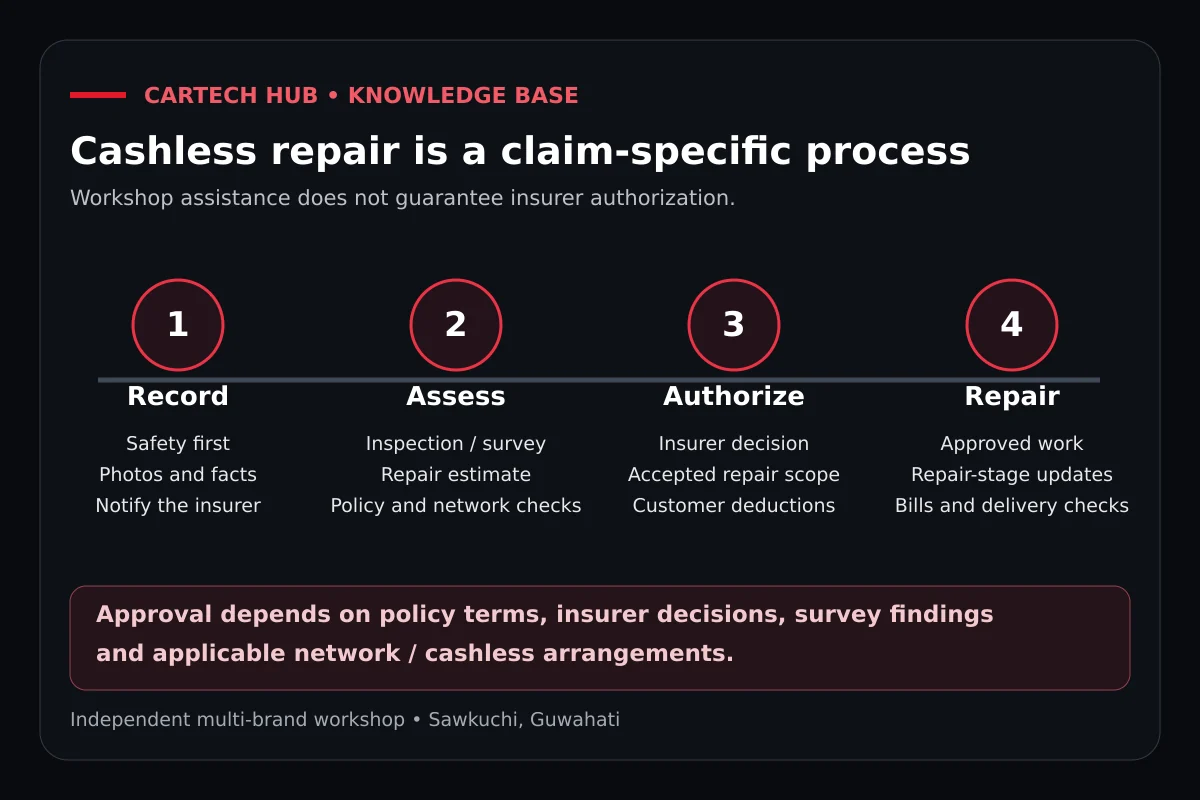
Tata AIG provides official guidance for cashless network claims and reimbursement claims, including registration and claim-handler support. Ask its team to confirm the permitted workshop route for your issued policy. CarTech Hub's role is independent repair estimation and assistance with the required records. A surveyor's visit does not in itself approve every part; coverage and the final assessment remain the insurer's responsibility. Request clarity about inspection, customer authorization and insurer authorization before arranging the work, particularly when the tailgate needs more than surface repair.
Bring complete, consistent documents
Keep a copy of the policy, RC, the driver's valid driving licence, the completed claim form or required digital submission and incident photographs. The initial estimate and claim reference make further communication easier. Tata AIG may need additional identity, ownership, payment or incident records according to the claim. An FIR or other police papers are conditional on the event and requirements, including applicable serious or third-party cases. Send truthful descriptions; a maintenance complaint should not be added to the accident account merely because the car is already visiting the workshop.
Obtain approval before moving from estimate to repair
Follow the insurer's survey or inspection instructions before dismantling or starting insured repairs unless it authorises otherwise.
List bumper and tailgate decisions separately
The proposed scope should distinguish a repairable cover from replacement, tailgate work, damaged lamps, clips, paint and labour. Hidden damage discovered during authorised access needs a documented supplementary request. Tata AIG's official guidance explains reassessment when further damage is identified; approval should be sought for that change rather than assumed. Agree who will authorise any customer-funded work so there is no confusion at collection.
Plan the amount insurance may not pay
The Sonet's own damage needs eligible own-damage protection; third-party-only cover does not pay for this vehicle's rear repair. Age-related exhaust wear, ordinary deterioration and unrelated service items are not normal accident claims. Cashless eligibility at CarTech Hub depends on Tata AIG authorization, applicable policy terms, survey findings and workshop/network acceptance. Deductibles, depreciation and non-covered expenses can remain payable by the owner. Add-ons such as depreciation reimbursement apply only within their wording, so confirm their effect on the actual approved parts rather than expecting free repair.
Check the rear of the vehicle at delivery
Approved body work and painting should be followed by checks on lamp operation, secure bumper attachment, tailgate latching and any affected reversing equipment. An unusual exhaust contact or retained warning needs investigation before release. Final repair records and insurer-required photographs support completion assessment. Review the non-payable balance and collect relevant receipts. A reimbursement customer may need to submit paid repair records directly to Tata AIG. The repair duration depends on survey decisions, identified damage and correct parts availability; this guide does not promise a fixed turnaround.
Contact CarTech Hub about a Sonet rear inspection
Request an appointment or begin a Tata AIG claim-assistance enquiry with vehicle year and damage details. You can call the workshop or use WhatsApp to ask about current inspection availability. Related information is in the Sonet service guide. Our Google Reviews page provides the configured feedback link without inventing insurer approvals or workshop ratings.
Quick answers
Should an aftermarket rear bumper guard be disclosed to Tata AIG?
Yes. Include the accessory and available fitment records in the damage description. Ask how it is treated under the actual policy and estimate; removing it from photographs to simplify the account would leave an incomplete record.
What should I do with luggage before leaving the Sonet for rear-body work?
Agree a handover inventory, remove personal valuables where safe and tell staff which items remain. Keep the key and vehicle-handover acknowledgement separate from the insurance document file so access arrangements are clear.
What question helps assess a proposed paint-blending line?
Ask the repairer to identify the affected and adjacent panels and explain why that operation is technically proposed. Keep it as an itemised estimate line for the insurer to assess rather than assuming adjacent repainting is payable.
How can I seek clarification when one rear-repair line is not accepted?
Ask Tata AIG for the reason against that specific estimate line and retain the decision reference. Submit supporting findings through its current claim channel if clarification is needed; the workshop cannot reverse an insurer decision.