In this guide
A practical service plan for a family EV
A Carens Clavis EV used for school runs and trips around Assam needs more than a clean exterior. Seats, cooling, tyres and braking all contribute to a comfortable journey. CarTech Hub, a multi-brand car workshop in Guwahati, can help owners organise an inspection, understand a repair proposal and coordinate accident documentation. Tell the team whether your concern involves routine upkeep, a warning message or collision damage so the booking reaches the appropriate service route.
Identify the electric variant before discussing parts
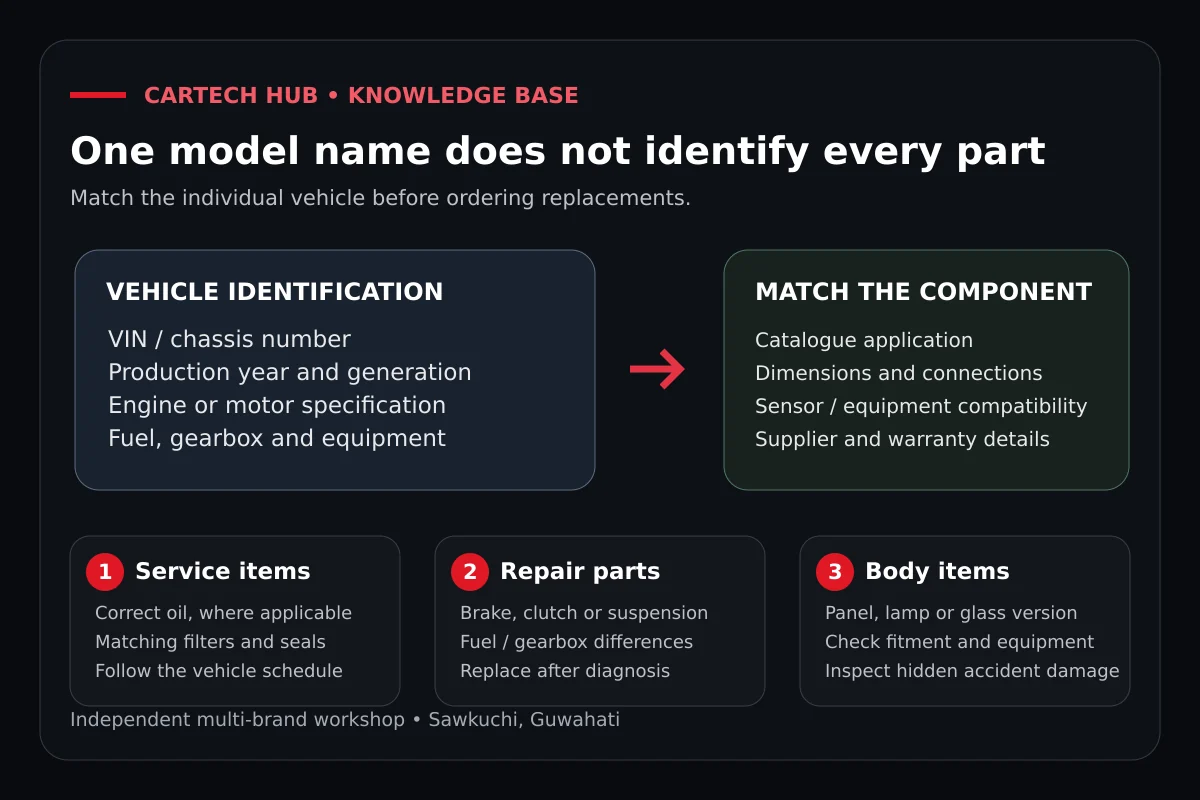
Kia's India specifications distinguish standard and extended-range battery versions of the Carens Clavis EV. They also show different seating and equipment configurations. Registration year, VIN and the original vehicle record matter more than a trim badge when ordering components. The petrol or diesel Carens Clavis is a separate vehicle application: its mechanical service list should never be copied into an EV job card. Bring the service history and explain any accessories fitted after delivery.
Maintenance that fits family use
Use the maintenance schedule supplied for your particular vehicle, including the manufacturer's instructions for demanding operating conditions. During an agreed general inspection, useful checks include tyre condition, visible brake wear, wipers, washer operation, lighting, seat-belt function and cabin filtration. School-run vehicles can accumulate dust inside frequently opened doors, while a fully occupied car makes correct tyre pressures especially important. Use the vehicle placard for pressures; do not substitute a number intended for another Carens variant. Keep dated records of inspections and replacements.
Brakes, suspension and cabin comfort
Regenerative slowing does not remove the need to inspect the physical brakes. Mention grinding, a change in pedal feel or pulling to one side promptly. Brake pads, discs, hoses, wheel-speed sensors, suspension bushes, bearings and steering joints are investigated according to the actual symptom. Uneven tread or a vibration after striking a pothole deserves a wheel and suspension assessment before a long journey. For poor rear-cabin cooling, explain which seating row is affected and whether airflow or temperature changes; this helps distinguish a ventilation complaint from a refrigeration fault.
Useful parts without an unsuitable engine-service list
Confirm each service item's application
Parts enquiries can cover the correct cabin filter, wiper blades, brake components, wheel bearings, lamps, mirrors and body fittings. Suppliers must match connectors, dimensions and equipment codes before compatibility is accepted. This battery-electric vehicle does not need combustion-engine oil and filter changes, spark plugs or a conventional clutch replacement. Its auxiliary 12-volt battery is distinct from the traction battery. High-voltage battery, motor, charging electronics and electric-compressor work require appropriately qualified facilities; CarTech Hub confirms scope or arranges referral rather than promising unrestricted EV repairs.
Front-end damage and specialist safety checks
The Clavis EV's front charging-port area makes a frontal impact an electrical-safety concern as well as a bumper repair enquiry. Do not reconnect charging equipment after damage to that area until an EV-qualified assessment permits it. Photograph visible damage from a safe distance. Bumper covers, lamp mounts, bonnet, cooling assemblies and adjacent panels are assessed together. Paintwork follows the approved repair method, while high-voltage isolation, structural work, airbags and ADAS calibration are referred when specialist equipment or manufacturer procedures are required. A cosmetic finish alone cannot establish vehicle safety.
Prepare an insurance claim with evidence
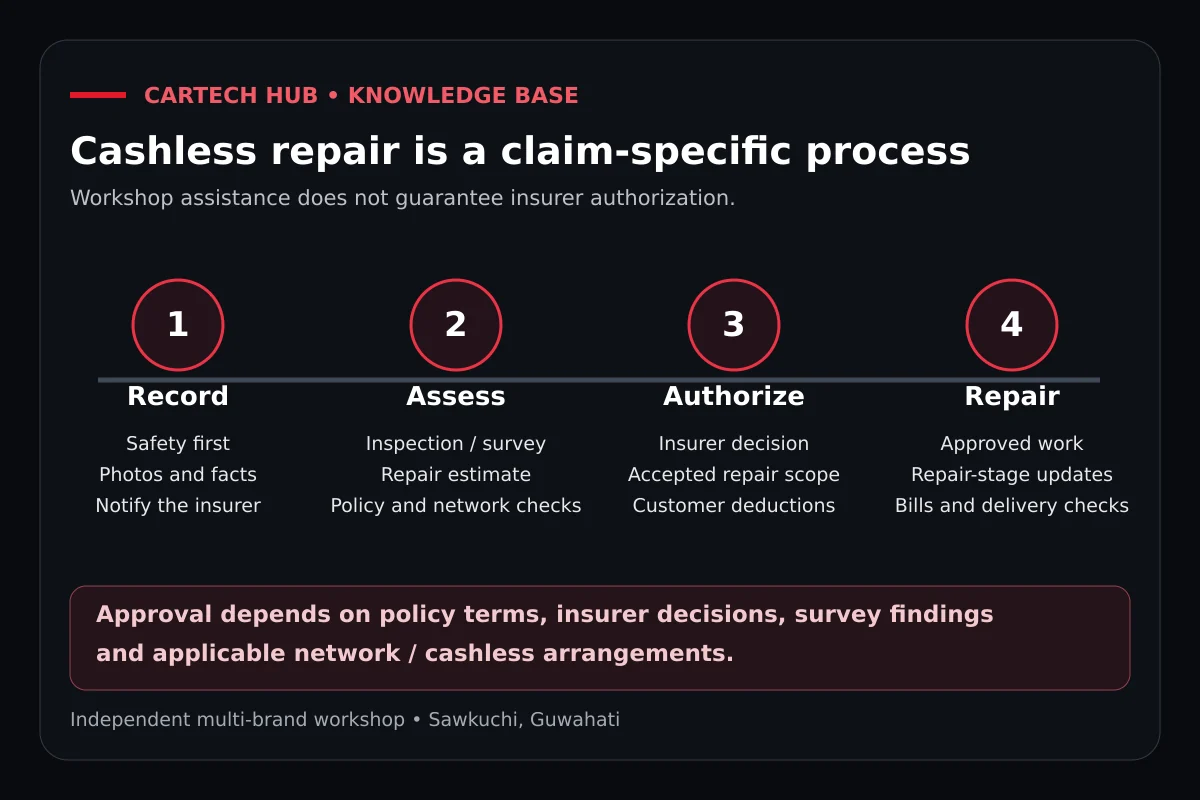
Contact your insurer and CarTech Hub before arranging insured repairs. Share the policy schedule, registration certificate, driver's licence, completed claim information and safe photographs. The insurer may request further identification, incident records or an FIR when circumstances require it. Ask whether the policy includes applicable own-damage protection; third-party-only insurance does not pay for your own car's accident repairs. HDFC ERGO and other motor insurers publish their own claim instructions, which take priority over a workshop's general checklist.
Separate the estimate from permission to repair
CarTech Hub can prepare a damage-based estimate and assist with the survey arrangements required by the insurer. Dismantling and insured repair work wait for the necessary inspection and authorization unless the insurer permits another course. Additional damage discovered later is documented for supplementary approval. Cashless claim assistance is available for enquiry in Guwahati; authorization depends on policy terms, survey findings, insurer approval and the applicable workshop/network arrangement. Battery cover and add-ons must be read in the issued policy. Deductibles, excluded items and applicable depreciation can remain payable by the owner.
Agree the handover and the next appointment
Before collecting the car, review the approved work, remaining concerns and any specialist inspection or calibration documentation. Completed repairs, paint quality and agreed functional checks are discussed with the customer; final claim papers and the owner's payable share are reconciled for delivery. Share your travel dates when booking an appointment, but allow time for parts matching and authorization. For accident questions, request claim assistance. Call the workshop, send details on WhatsApp, or locate CarTech Hub through Google Reviews. CarTech Hub is independent and does not claim authorized Kia service-centre status.
Quick answers
Should I remove family luggage and child seats for an inspection?
Ask which cabin areas need access when booking. Remove loose valuables and luggage, and agree whether a child seat must be moved. The owner should follow its installation instructions when refitting it; passengers should not remain in the car during workshop inspection.
What details help with a noise from the second-row seating area?
If it is safe, record a short demonstration while the car is parked and note which seat position produces the sound. Tell the workshop whether a seat was recently folded or adjusted; do not dismantle its restraint or mounting components.
Can I request separate inspection and specialist-referral estimates?
Yes, ask for the proposed general inspection scope, any assessment charge and the expected referral steps before authorizing work. A specialist recommendation does not mean that every additional diagnosis or transport cost is included in the first quotation.
What should I do with holiday luggage before an accident assessment?
Make a private list of belongings and remove accessible valuables only when the vehicle is safe to approach. Tell the recovery or workshop team if something remains inside. Personal-property losses are not automatically covered by a vehicle repair claim.