In this guide
A motor claim is easier to follow when the incident facts, vehicle documents, damage records and insurer instructions are kept together from the beginning. This monsoon readiness guide explains the workshop-side questions connected with electrical water damage for motorists around Ulubari and central Guwahati traffic. It does not predict a claim decision, because the insurer must assess each file under the applicable policy.
Why the monsoon readiness file should be checked early
Start by confirming the insured vehicle, policy period, incident date and official claim reference. Write a short, factual loss description and keep it consistent across the form, photographs and later replies. If the insurer asks for a survey before dismantling or repair, follow that instruction and record the survey status.
Monsoon conditions that deserve attention
The following file or repair-status signals deserve prompt clarification:
- Oil or fluid looks milky.
- Electrical systems behave unpredictably.
- A damp smell persists.
- Warning lights appear after drying.
- The engine stopped in standing water.
If the incident has affected braking, steering, visibility, overheating, fluid retention or the ability to control the car, do not continue driving merely to obtain more evidence. Prioritise safety, arrange appropriate recovery and follow the insurer's incident-reporting instructions.
How CarTech Hub supports the workshop-side process
The workshop-side sequence normally moves from intake photographs and an initial estimate to survey coordination, clarification, authorization and repair. Hidden damage may require insurer-approved dismantling before a supplementary estimate can be prepared. The customer should be informed whenever the approved scope differs from the complete workshop recommendation.
A relevant inspection may include:
- Electrical connectors and control units.
- Cabin insulation and drying needs.
- Claim photographs and survey requirements.
- Water level and exposure duration.
- Air intake and engine condition before cranking.
This checklist is broader than the workshop estimate alone because a complete claim file connects the incident, policy, survey and repair records. Confirm any insurer-specific requirement directly through an official channel.
What can change the estimate and timeline
The scope for electrical water damage may change after inspection. Important variables include policy coverage and add-ons, survey findings and repair authorization, depth and duration of immersion, whether the engine was restarted and fresh versus contaminated water. A written estimate should identify known work and explain any area that remains conditional on dismantling, insurer review or further testing. Parts availability for a specific make and model can also affect the completion date.
For a petrol vehicle, previous repairs and service records can be as important as mileage. A lower initial estimate is not automatically better if it omits necessary testing, fluids, fasteners, calibration or quality-control work. Customers should compare the repair scope, not only the final number.
Customer approval and workshop records
Before authorising claim repairs, compare the workshop estimate with the insurer-approved scope. Ask which parts, labour, paint, consumables and taxes are accepted and which amounts remain payable. Keep the estimate, authorization, supplementary approvals, final invoice, receipts and settlement communication together.
Helpful questions include: “Which estimate lines are approved?”, “Which deductions apply and why?” and “Is any item still awaiting surveyor or insurer review?” Written answers make the delivery discussion clearer and reduce misunderstandings about cashless or reimbursement settlement.
Records and follow-up after monsoon readiness
Useful claim-file and customer follow-up steps include:
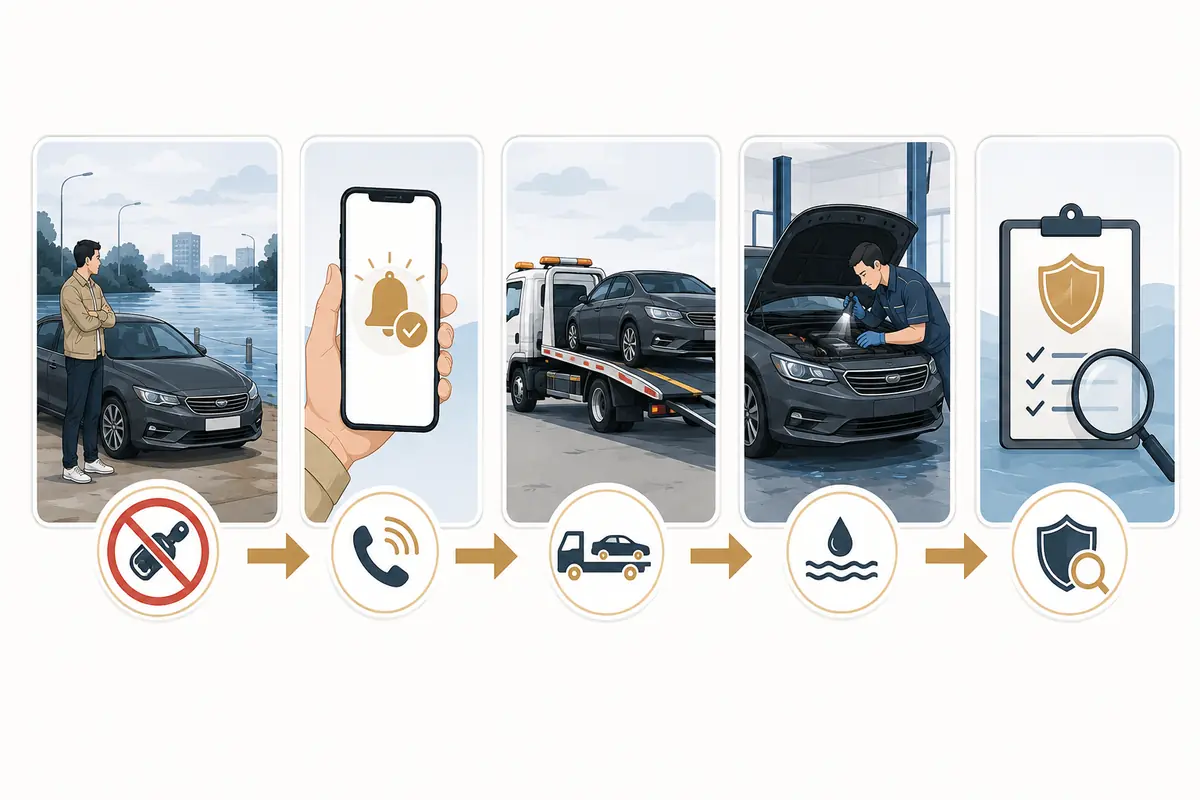
- Monitor connectors and corrosion after repair.
- Do not restart a stalled vehicle in water.
- Arrange suitable towing.
- Photograph the water line safely.
- Intimate the insurer promptly.
Monsoon losses can develop hidden electrical, interior or corrosion concerns after the first inspection. Do not restart a stalled vehicle in standing water merely to test it. Arrange suitable recovery, record the visible water level when safe and follow the insurer's instructions about survey or dismantling.
electrical water damage in the Guwahati service area
When towing service in Guwahati is the starting search, confirm the workshop location, multi-brand capability and the scope of inspection before travelling. CarTech Hub serves Guwahati motorists and can discuss electrical water damage after receiving the vehicle details and completing the checks that the concern requires.
Important insurance and cashless authorization conditions
CarTech Hub can assist with workshop estimates, photographs, repair documentation and coordination. Cashless authorization, claim admissibility and final approval depend on the customer’s policy terms, insurer approval, survey findings and applicable network/cashless arrangements. Approved repair scope, depreciation, deductibles, exclusions, consumables and final settlement are decided by the insurer. Mentioning electrical water damage does not guarantee that CarTech Hub is currently an authorised cashless network workshop for a particular insurer or that any claim will be accepted.
Customers should intimate the insurer through an official channel, retain the claim reference and follow instructions about survey or inspection before repair begins. Commonly requested records can include the policy schedule, RC, driving licence, claim form, incident details, photographs, estimate, invoices and receipts. An FIR or another police document may be required depending on the event and insurer instructions, so customers should confirm the exact list directly with the insurer.
Frequently asked questions about electrical water damage
Can a workshop confirm claim approval from a phone conversation?
No. A workshop can explain its estimate and documentation, but the insurer decides authorization and settlement after applying the policy terms and reviewing the available evidence.
Does cashless authorization mean there will be no customer payment?
Not necessarily. Deductibles, depreciation, consumables, exclusions, non-approved work or differences between the estimate and authorized scope may remain payable by the customer.
What should a customer share when requesting claim assistance?
Provide the vehicle make, model and registration, insurer name, claim reference, incident date and survey status. Use private channels for documents and redact information that the workshop does not need.