
In this guide
Questions about rear-end collision repair often begin with one change in the way a car sounds, feels or behaves. For drivers around Beltola traffic and frequent short trips, a structured mistake prevention review helps turn that observation into useful information for a workshop. CarTech Hub recommends recording when the concern occurs instead of approving parts only from a guess.
Why rear-end collision repair deserves a documented first check
A workshop estimate should follow evidence. That evidence may include a visual check, measurements, scanner information, a safe road test, service records or dismantling authorised by the customer. The exact combination depends on rear-end collision repair. Asking what was checked and why a particular action is suggested creates a more transparent decision for the owner.
Mistakes that can make the concern worse
The following observations do not prove a specific failure, but they are useful reasons to pause, record the condition and arrange an inspection:
- Panel gaps or doors change.
- Coolant or fluid leaks appear.
- Warning lights remain on.
- A wheel sits at an unusual angle.
- Safety systems or sensors stop working.
When a symptom affects braking, steering, visibility, overheating, fluid retention or the ability to control the car, avoid continuing the journey merely to test it again. A safe stop and appropriate recovery can prevent added damage and risk.
How CarTech Hub approaches rear-end collision repair
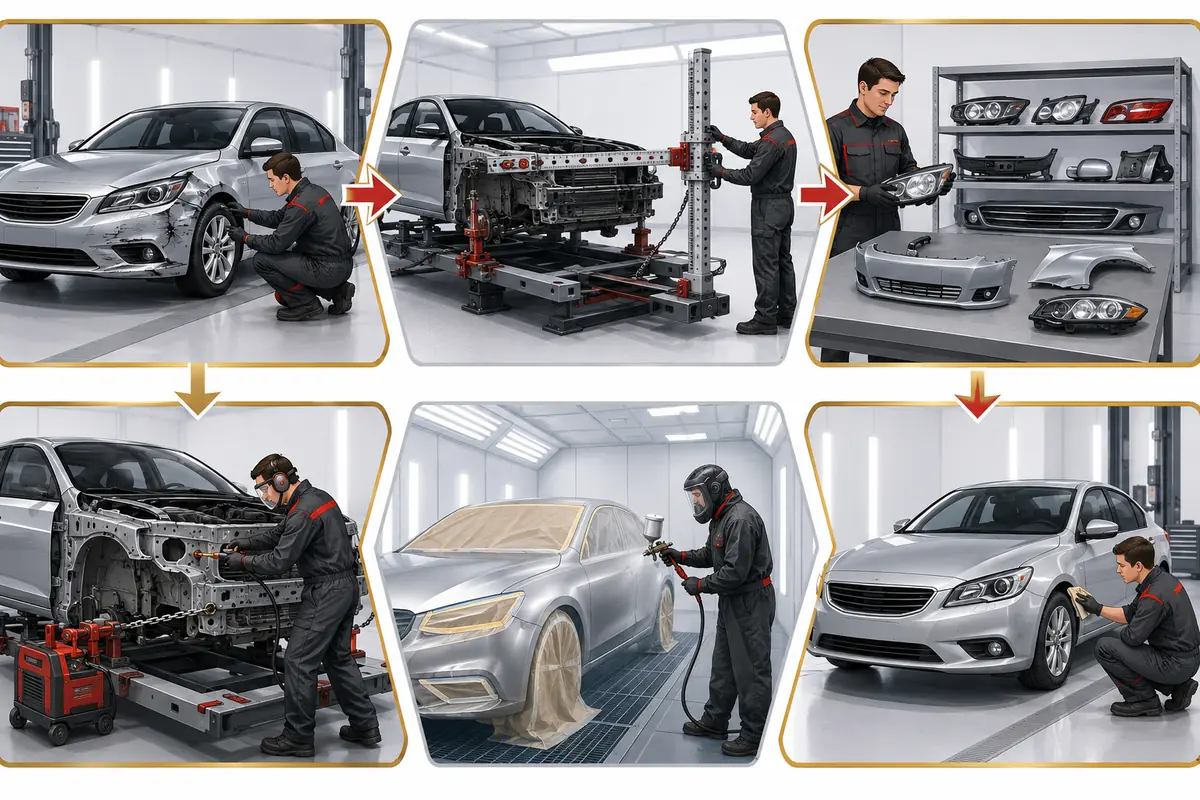
CarTech Hub first confirms the vehicle details and the customer's main concern. The team then uses the relevant checks, compares the findings with service information and explains the proposed scope. If dismantling is needed to see hidden wear, that should be communicated before it happens. No estimate can be exact until the accessible condition and required parts are known.
A relevant inspection may include:
- Cooling and fluid systems.
- Lights, sensors and wiring.
- Body measurements where indicated.
- Road test and final scan after repair.
- Visible and hidden impact zones.
The list is deliberately broader than a single parts recommendation. Different vehicles can produce a similar symptom for different reasons, so testing should narrow the cause before the customer approves a repair.
What can change the estimate and timeline
The scope for rear-end collision repair may change after inspection. Important variables include parts availability, paint and refinishing scope, insurer or customer authorization, extent of hidden damage and repair versus replacement decisions. A written estimate should identify known work and explain any area that remains conditional on dismantling, insurer review or further testing. Parts availability for a specific make and model can also affect the completion date.
For an automatic car, previous repairs and service records can be as important as mileage. A lower initial estimate is not automatically better if it omits necessary testing, fluids, fasteners, calibration or quality-control work. Customers should compare the repair scope, not only the final number.
Customer approval and workshop records
Before authorising work, confirm the complaint recorded on the job card, the proposed checks, the parts standard, the estimated labour, taxes and the process for approving additional findings. Keep the estimate, approval messages, invoice, part details and any warranty information together. These records help with future maintenance, resale and follow-up if the same symptom returns.
A helpful customer question is: “What finding supports this recommendation?” Another is: “What will you verify after the work is completed?” Clear answers make the delivery discussion more useful and reduce misunderstandings about what the repair was intended to solve.
Care after attention to rear-end collision repair
Practical aftercare for this topic includes:
- Verify warning lights are resolved.
- Complete a careful delivery inspection.
- Stop driving if safety is uncertain.
- Photograph the scene and damage safely.
- Keep removed-parts and repair records as required.
Local use matters because a car driven mainly on short urban trips may age differently from one used for long highway travel. Around Beltola traffic and frequent short trips, repeated braking, idling, water exposure and uneven surfaces may change the inspection priorities. Maintenance decisions should therefore reflect actual use rather than mileage alone.
Local workshop guidance for rear-end collision repair
A search for accident repair in Guwahati should lead to a workshop that explains the inspection, estimate and approval points clearly. At CarTech Hub – Multi-Brand Car Workshop in Sawkuchi, the conversation about rear-end collision repair starts with the vehicle’s actual condition, service history and the customer’s priorities. It can also help people comparing car repair near me understand which workshop questions to ask before approving work.
A practical final reminder
This article provides general owner education about rear-end collision repair; it cannot confirm the condition of an individual vehicle. CarTech Hub in Sawkuchi, Guwahati can inspect multi-brand vehicles and explain a vehicle-specific plan. Stop using the car and arrange safe recovery when the concern could affect control, braking, overheating, electrical safety or further mechanical damage.
Frequently asked questions about rear-end collision repair
Can rear-end collision repair be confirmed from a phone description?
A phone conversation can help plan the visit, but it normally cannot confirm the failed part or final cost. Inspection and testing are needed for a vehicle-specific answer.
Should the cheapest parts option always be selected?
No. Compatibility, safety, expected life, warranty, correct specification and the total labour involved should be considered together. Ask the workshop to identify the proposed parts standard.
How can a customer book help in Guwahati?
Use the CarTech Hub online booking page or WhatsApp with the vehicle make, model, registration, main symptom and preferred date. Share personal documents only through an appropriate private channel.