In this guide
A newly painted panel can look impressive in a photograph, yet a photograph cannot show every part of the repair. When arranging denting and painting in Guwahati, customers benefit from an estimate that explains the panel condition, the preparation work and the finish being proposed—not simply “one panel paint.”
Begin with the damage, not the colour
Ask the workshop to identify the affected panel and the damage it can currently see. A scrape, a dent, a distorted mounting point and an older repair underneath the surface are not identical jobs. An inspection may need to distinguish cosmetic damage from a concern that requires a wider accident assessment.
Request a clear explanation of why repair or replacement is being recommended. The answer should relate to the inspected condition and applicable repair information. It should not rely only on the apparent size of a mark.
Preparation is part of the repair
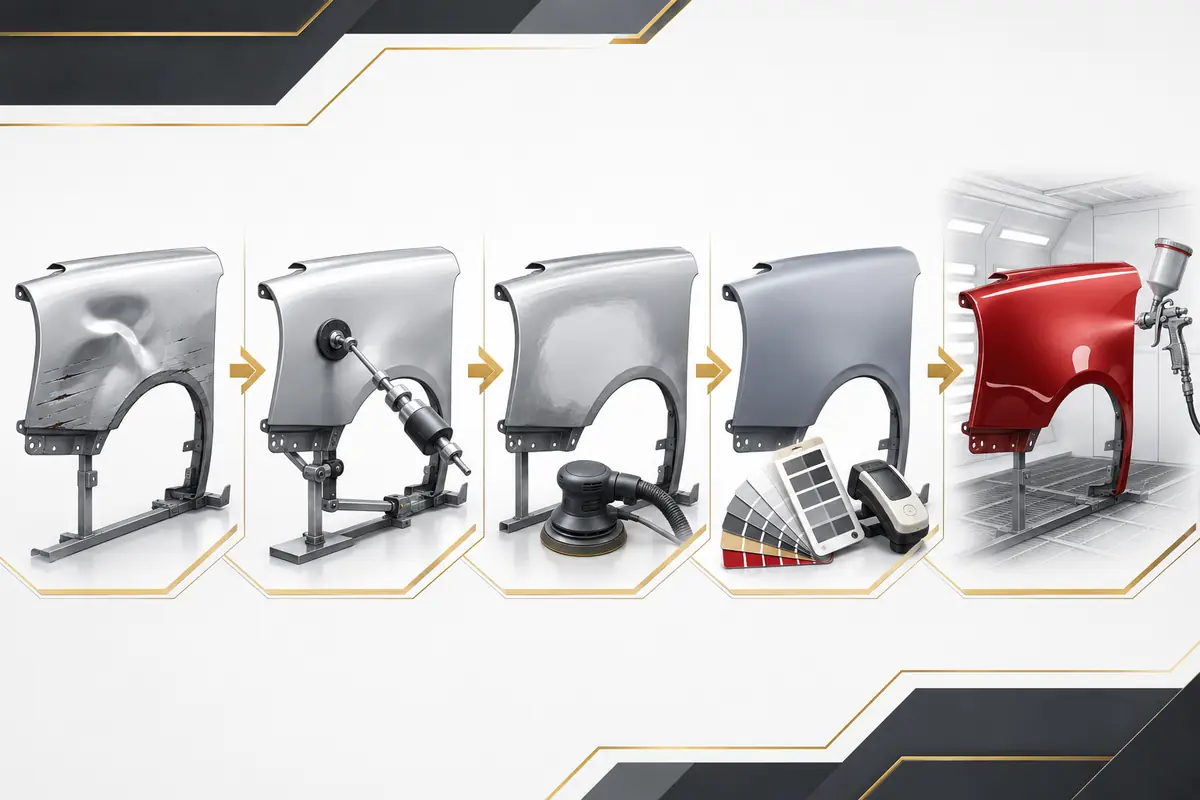
Paint is the visible end of a longer process. The 3M small-damage repair guidance includes surface cleaning, preparation, application of repair materials and inspection. Its technical steps are intended for trained repairers, not as a home painting recipe.
For the customer, the useful question is whether the quotation includes preparation rather than treating it as an unexplained extra. Ask how any rust, earlier filler or hidden damage will be handled if discovered. Agree that material changes to the estimate require your approval.
Define the refinishing area
Confirm the panel being refinished and whether any adjacent area is included. Colour matching involves more than reading a paint code: the repairer must assess the existing finish and the proposed process. Do not expect a website article to guarantee an invisible match on every aged or previously repaired surface.
Ask how the workshop will explain a revised scope if matching requires additional work. A written decision avoids misunderstandings when an adjacent panel appears on the final invoice.
Keep the repair record understandable
Photographs before work, the approved estimate and a final itemised bill create a useful record. This matters especially when the repair relates to an insurance claim. Ask the insurer what evidence or inspection it requires before dismantling or refinishing begins.
Cashless authorization, claim admissibility and final approval depend on the customer’s policy terms, insurer approval, survey findings and applicable network/cashless arrangements. A refinishing quotation is not an insurer’s approval.
Inspect the handover calmly
Arrange time to view the agreed repair rather than collecting the car in a rush. Look at the panel in available daylight, check the agreed finish and ask about any visible concern. Request written aftercare guidance appropriate to the products and repair process; avoid inventing a universal washing or polishing deadline.
CarTech Hub – Multi-Brand Car Workshop offers denting and painting information and an accident repair overview. Customers across Guwahati and nearby Assam routes can arrange an assessment and review the claim assistance guide where relevant.
Technical reference: 3M small-damage repair guidance.