
In this guide
When a scan report mentions a wheel-speed sensor or another ABS component, an owner may assume the named part must be replaced. A diagnostic description is not always that simple. It reports information recorded by a control system; the workshop must still establish what that information means on the particular vehicle.
This article addresses the report and repair decision. If the car has a brake warning or abnormal braking, deal with the immediate safety concern first. Do not use a scanner result as permission to continue driving an unsafe car.
Confirm what was actually scanned
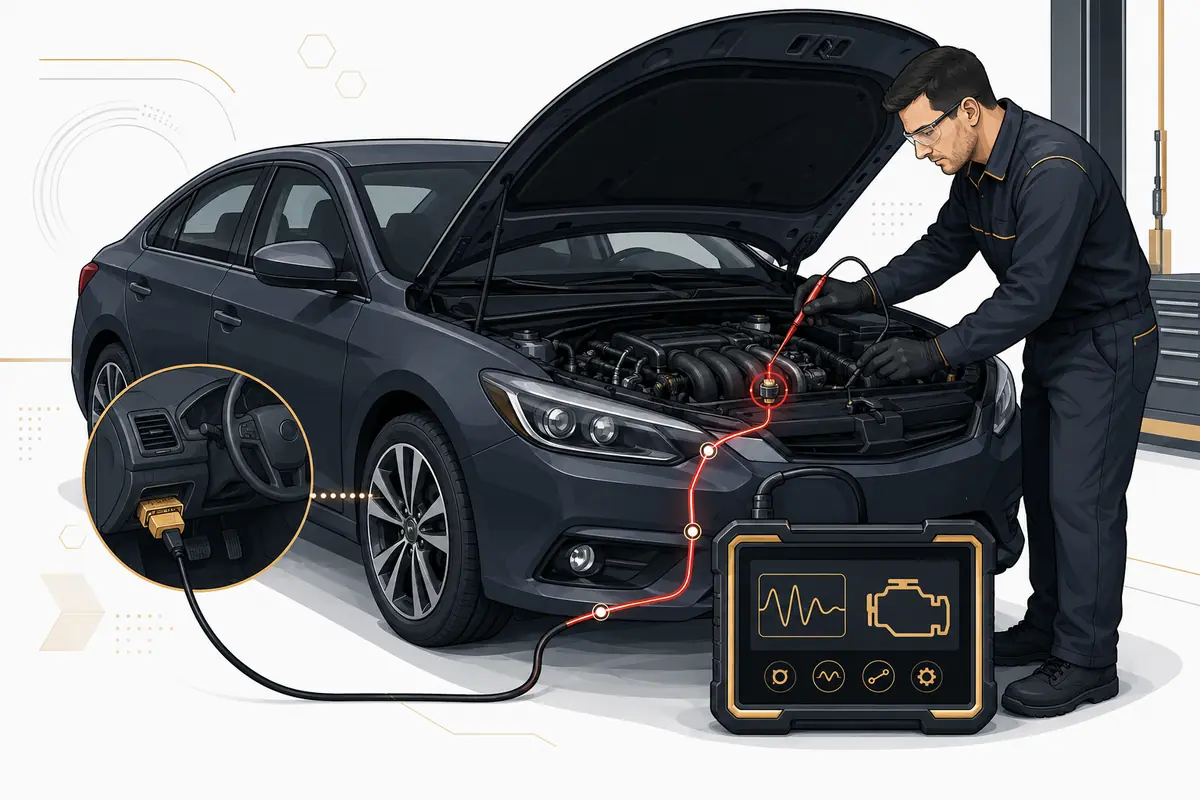
Ask which vehicle systems the tool accessed. A basic engine-code reading is not necessarily a complete ABS investigation. The report should identify the vehicle, the affected module and the recorded codes or messages accurately.
Write down the full code and description rather than remembering a shortened phrase. Diagnostic-tool manufacturers such as Snap-on publish different code categories, including communication faults. This illustrates why a report needs context rather than a one-code, one-part assumption.
Connect the report with the complaint
Tell the technician when the warning appeared and what the vehicle was doing. If it followed wheel work, electrical work or a battery event, include that history. Do not decide the cause solely from the sequence; give the workshop enough information to investigate it.
Ask whether the recorded information matches the current concern, whether the condition is present now, and what further evidence is needed. An intermittent complaint can require a different investigation plan from a consistently reproducible one.
Understand why physical checks remain necessary
A scan is one source of evidence. Depending on the vehicle and code, the technician may need relevant checks of components, connections or other system information. The manufacturer’s diagnostic procedure should guide the sequence; an internet list cannot substitute for it.
At CarTech Hub – Multi-Brand Car Workshop in Guwahati, customers can ask for the relationship between the report, the inspection findings and the proposed action to be explained. The important question is “What confirms this recommendation?” rather than simply “Which code came up?”
Agree consent before the investigation expands
Clarify the initial diagnostic charge and scope. If the next step requires additional time, dismantling or a part, ask for an updated proposal before work proceeds. A scanner session should not become an open-ended repair authorisation.
Where the result remains uncertain, request a written explanation of what is known and what the next test is intended to establish. A professional assessment can acknowledge uncertainty; pretending every code provides an instant answer is not helpful.
Keep the before-and-after record
If repair is carried out, retain the original report, confirmed finding, work performed and subsequent check. Clearing a code alone is not the same as correcting its cause. Ask how the result was verified and what to do if the warning returns.
These records help Guwahati and Northeast India vehicle owners understand future visits without paying repeatedly for a diagnosis that was never clearly documented.